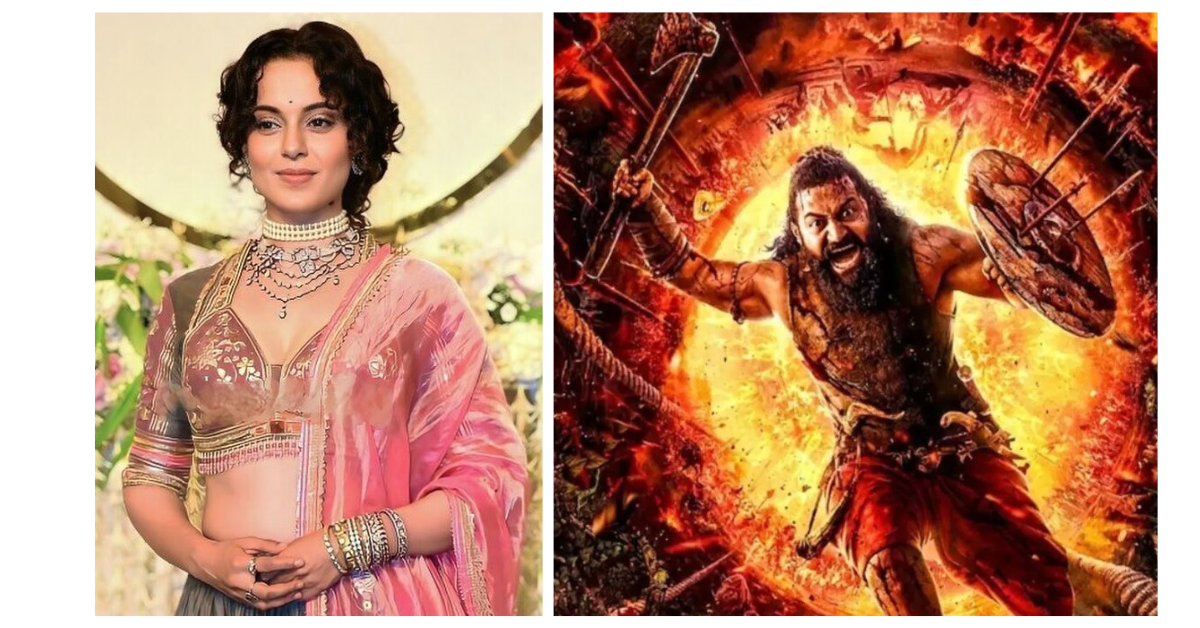
Bollywood actor and outspoken public figure Kangana Ranaut has weighed in on the sensational buzz around Rishab Shetty’s latest film, Kantara: Chapter 1, offering high praise for its cultural resonance and perceived societal significance. According to her remarks, the film could play a critical role in preserving indigenous traditions and countering “tribal conversion.”
“Very nice, such films can be crucial for stopping tribal conversion also.”
— Kangana Ranaut (in response to a social media user)
Let’s unpack what Ranaut said, why it has generated attention, and how Kantara: Chapter 1 is already making waves in the cinematic and cultural landscape.
What Kangana Actually Said
Kangana’s comment came while responding to a social media post showcasing how Kantara depicts the Dev culture (a spiritual tradition linked to ancestral worship and local deities). The post drew parallels between the Himalayan traditions and those of South India, prompting Kangana to add:
“Until I saw this movie … The Dev culture … this movie beautifully shows … such films can be crucial for stopping tribal conversion.”
Her statement frames Kantara not just as entertainment but as a deliverer of cultural preservation. She suggests that by bringing attention to indigenous faith systems and rituals, films like this can act as bulwarks against religious conversion among tribal and rural communities.
Why Her Praise Matters (and Draws Controversy)
-
Public Profile & Polarization
Kangana is a high-profile, often polarising personality in media and politics. Her views tend to grab headlines, and praise from her can amplify both acclaim and criticism. -
Cultural Messaging
By framing Kantara as “crucial,” she places the film in a role of social influencer — not merely a creative work, but a tool for safeguarding tradition. -
Debate Over Tribal Conversion
Her use of “tribal conversion” is politically and socially charged in India — it triggers debates around religious freedom, identity, and social engineering. Some will welcome the idea of preserving indigenous traditions; others may view it as undermining religious liberty. -
Art vs. Ideology
When films are elevated into ideological symbols, they become subject to both praise and scrutiny — as art, but also as statements.
Kantara: Chapter 1 — At a Glance
To understand why Kangana’s praise is resonating, here are some key facts about Kantara: Chapter 1:
-
The film is a mythological-action prequel to the 2022 hit Kantara.
-
It explores the origins of Buta Kola rituals and the spiritual ties between nature, land, and human culture.
-
The film has already broken major box-office records in India.
-
Critics have generally praised its visuals, cultural depth, and ambition, even as some note narrative flaws.
-
Behind the scenes, Rishab Shetty revealed that 90% of editing was done in his Karnataka village, reinforcing the film’s “rooted” creative approach.
-
Notably, the climax was shot under physically grueling conditions, with Shetty working through exhaustion and injury — a testament to his commitment to the film.
Reactions & Implications
-
Cultural Appreciation vs. Political Lens: Some will see Kangana’s praise as a celebration of Indian heritage. Others may interpret it as co-opting art into cultural-political narratives.
-
Elevating Kantara Beyond Cinema: Films like Kantara become more than box-office hits; they gain symbolic currency. Kangana’s endorsement pushes it further into national discourse.
-
The Balancing Act: While cultural affirmation is valuable, it’s essential to maintain creative freedom and avoid reducing cinema to message-bearing vehicles alone.
Final Thoughts
Kangana Ranaut’s remarks further fuel the conversation around Kantara: Chapter 1, spotlighting how cinema intersects with identity, tradition, and politics. Whether one agrees with her framing or not, her praise amplifies the film’s reach beyond the big screen — into the terrain of cultural dialogues.
For those interested in how regional cinema is shaping national debates or how film narratives become platforms for identity politics, Kantara: Chapter 1 is now more than a blockbuster — it’s a statement.