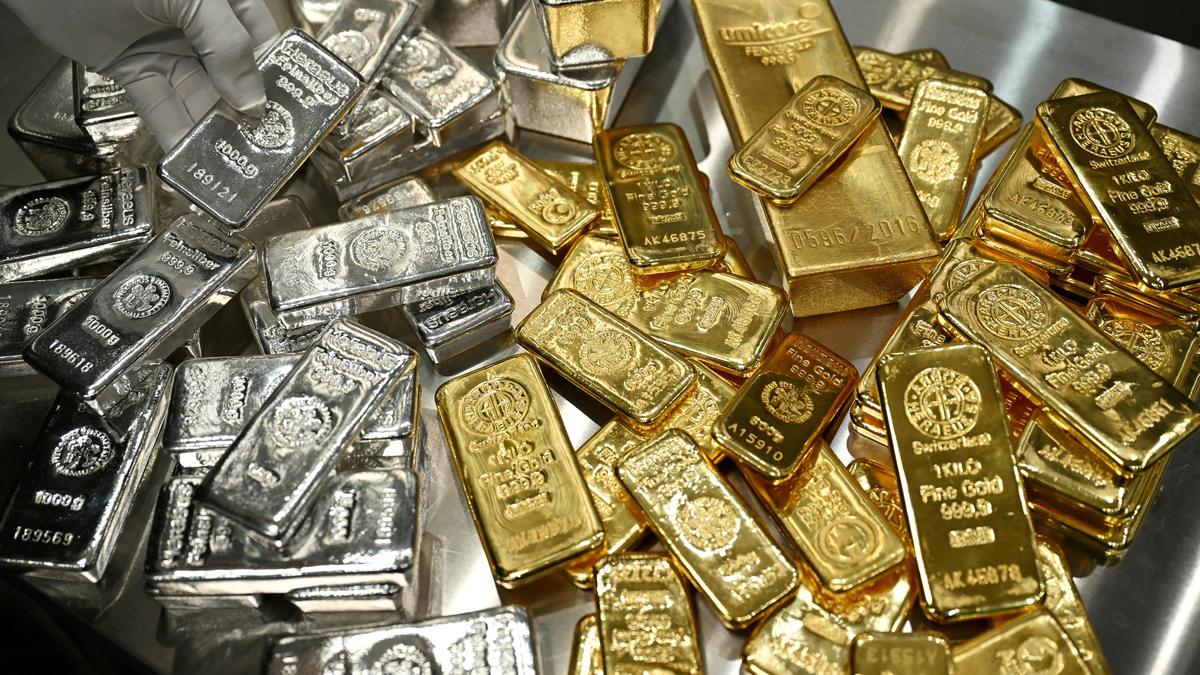
Global commodity markets witnessed a sharp downturn as gold and silver prices plunged by over 7%, sending shockwaves across investors and financial markets. Traditionally considered safe-haven assets, both metals unexpectedly declined despite rising geopolitical tensions in West Asia—leaving many investors questioning the underlying causes.
This sudden price drop highlights the complex interplay between geopolitics, global monetary policy, and investor sentiment.
🌍 What Triggered the Sharp Decline?
Geopolitical tensions in West Asia typically drive investors toward safe-haven assets like gold and silver. However, this time, the opposite occurred due to a combination of factors:
1. Stronger US Dollar Pressure
A strengthening US dollar often leads to a decline in gold and silver prices. As the dollar gains value, commodities priced in USD become more expensive for international buyers, reducing demand.
2. Rising Bond Yields
Global bond yields, particularly US Treasury yields, have been rising. Higher yields make fixed-income investments more attractive compared to non-yielding assets like gold and silver, prompting investors to shift funds.
3. Profit Booking by Investors
After recent rallies, many institutional and retail investors chose to lock in profits. This wave of selling contributed significantly to the sharp decline.
4. Liquidity Concerns
During periods of uncertainty, investors sometimes liquidate assets—even safe havens—to cover losses in other markets or maintain liquidity.
📊 Market Reaction and Investor Sentiment
The 7% crash in gold and silver prices triggered panic selling across global commodity exchanges. Traders reacted swiftly, leading to increased volatility and high trading volumes.
In India, the decline was reflected in MCX (Multi-Commodity Exchange) prices, where both gold and silver saw significant intraday losses. Retail investors, who often view these metals as long-term hedges, were caught off guard by the sudden movement.
🪙 Why Safe-Haven Assets Fell Despite Tensions
It may seem counterintuitive that gold and silver fell during geopolitical unrest. However, market behaviour is influenced by multiple macroeconomic factors beyond just geopolitical risks.
- Interest Rate Expectations: Central banks maintaining or signalling higher interest rates reduce the appeal of gold
- Inflation Trends: If inflation expectations stabilize, demand for hedging assets weakens
- Global Risk Appetite: Investors may temporarily shift toward cash or dollar-based assets
This demonstrates that gold and silver are not immune to broader financial market dynamics.
📉 Impact on Investors
The sharp correction has affected different types of investors in various ways:
Short-Term Traders
Faced significant losses due to high volatility and rapid price swings.
Long-Term Investors
While the decline is concerning, long-term investors may view this as a temporary correction rather than a trend reversal.
Jewelry and Physical Buyers
This dip could present a buying opportunity for consumers and jewellers, especially in price-sensitive markets like India.
🔮 What’s Next for Gold and Silver Prices?
Market experts suggest that volatility may continue in the near term. Key factors to watch include:
- Developments in West Asia tensions
- US Federal Reserve policy decisions
- Movement of the US dollar index
- Inflation and global economic data
If geopolitical risks escalate further, gold and silver could regain their safe-haven appeal. However, continued strength in the dollar and rising yields may keep prices under pressure.
💡 Should You Buy, Sell, or Hold?
Investment decisions should be based on your financial goals and risk tolerance. Here’s a general perspective:
- Buy: If you are a long-term investor, this dip could offer a good entry point
- Hold: Existing investors may consider holding positions to ride out volatility
- Sell: Short-term traders should be cautious and monitor market trends closely
Diversification remains key—gold and silver should be part of a balanced portfolio rather than the sole investment.
📌 Conclusion
The recent 7% crash in gold and silver prices amid West Asia tensions highlights the unpredictable nature of global financial markets. While geopolitical uncertainty usually boosts safe-haven demand, other macroeconomic forces, such as a strong dollar and rising yields, have overshadowed this trend.
For investors, this serves as a reminder to stay informed, avoid panic-driven decisions, and focus on long-term strategies. As the situation evolves, gold and silver markets will likely remain volatile—but full of opportunities for informed investors.