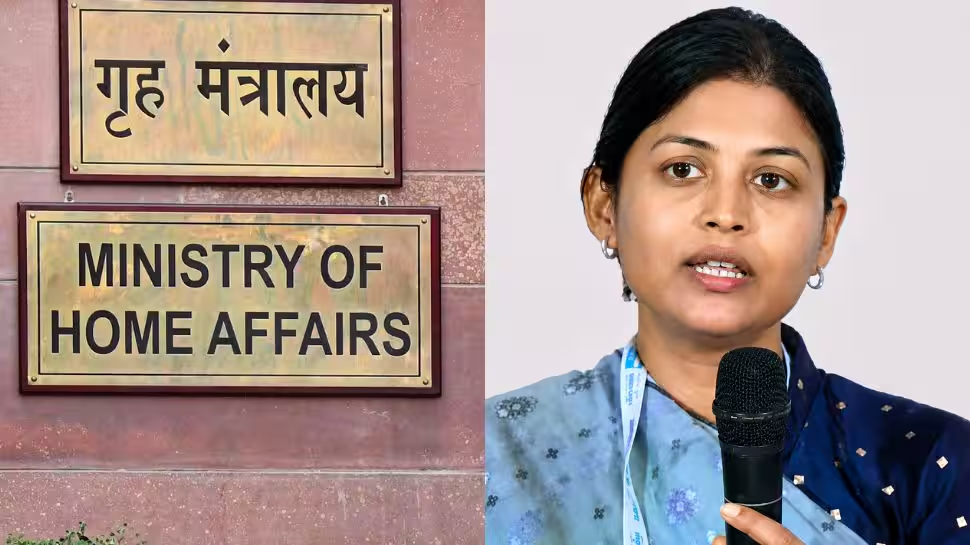
Padma Jaiswal has recently made headlines after the Central Government dismissed her from service over corruption allegations linked to her tenure in Arunachal Pradesh. The case has drawn national attention because strict disciplinary action against a serving IAS officer is considered rare in India’s administrative system.
Padma Jaiswal belonged to the AGMUT cadre, which stands for Arunachal Pradesh-Goa-Mizoram and Union Territories cadre. She was a 2003-batch IAS officer and had served in multiple important administrative positions across Arunachal Pradesh, Delhi, Goa, and Puducherry during her career.
Why Was Padma Jaiswal Removed?
According to official reports, the Centre dismissed Padma Jaiswal following corruption allegations dating back to 2007-08 when she served as the Deputy Commissioner of West Kameng district in Arunachal Pradesh. A complaint filed by residents accused her of misusing her official position and allegedly misappropriating government funds.
The disciplinary process reportedly involved recommendations from the Ministry of Home Affairs (MHA), the Department of Personnel and Training (DoPT), the Central Vigilance Commission (CVC), and the Union Public Service Commission (UPSC). The final dismissal order was approved by the President of India.
Reports also stated that Padma Jaiswal had earlier been suspended in 2008, but the suspension was later revoked in 2010 while investigations continued. The inquiry reportedly lasted several years before the final action was taken in 2026.
Padma Jaiswal’s IAS Career
During her administrative career spanning more than two decades, Padma Jaiswal held several government positions across multiple regions under the AGMUT cadre.
She worked in:
- Arunachal Pradesh
- Delhi
- Goa
- Puducherry
Her role as Deputy Commissioner of West Kameng district became the focal point of the corruption investigation. The allegations related to financial irregularities and misuse of public funds during her administrative tenure there.
The case has become one of the rare instances where a serving IAS officer faced dismissal after a prolonged disciplinary process.
Education Qualifications of Padma Jaiswal
Apart from her administrative career, Padma Jaiswal also had a strong academic background. According to publicly available information from her LinkedIn profile, she studied at St. Xavier’s School before pursuing higher education at the University Business School, Panjab University.
Her qualifications reportedly include:
- MBA degree
- Company Secretary certification from the Institute of Company Secretaries of India (ICSI)
- Experience as a UGC Research Fellow
Her academic interests reportedly covered:
- Business Administration
- Management
- International Affairs
- Financial Management
- Legal Personnel Management
These qualifications contributed to her reputation as a well-educated civil servant before the corruption allegations surfaced publicly.
Legal and Administrative Developments
The case also involved legal proceedings related to disciplinary jurisdiction. Reports indicate that the Central Administrative Tribunal (CAT) had earlier quashed certain proceedings, but the Delhi High Court later restored them in favour of the Centre in 2026.
The Ministry of Home Affairs reportedly initiated disciplinary action under Rule 8 of the All India Services (Discipline & Appeal) Rules. Following recommendations from multiple agencies, the government proceeded with her removal from service.
Interestingly, reports mention that removal from service does not automatically prohibit future government employment, although it effectively ends her IAS tenure.
Public Reaction to the Case
The dismissal of Padma Jaiswal has sparked discussions across social media and public forums regarding accountability within India’s bureaucracy. Many users described the action as unusual because disciplinary cases against senior civil servants often take years to conclude.
The case has also reignited debates around transparency, governance, and corruption in public administration.
Final Thoughts
The Padma Jaiswal IAS case has become one of the most talked-about bureaucratic controversies of 2026. From a strong academic background and senior administrative positions to corruption allegations and dismissal from service, the story highlights the complexities of accountability within India’s civil services.
As investigations and discussions continue, the case remains significant for both administrative reforms and public discourse surrounding transparency in governance.