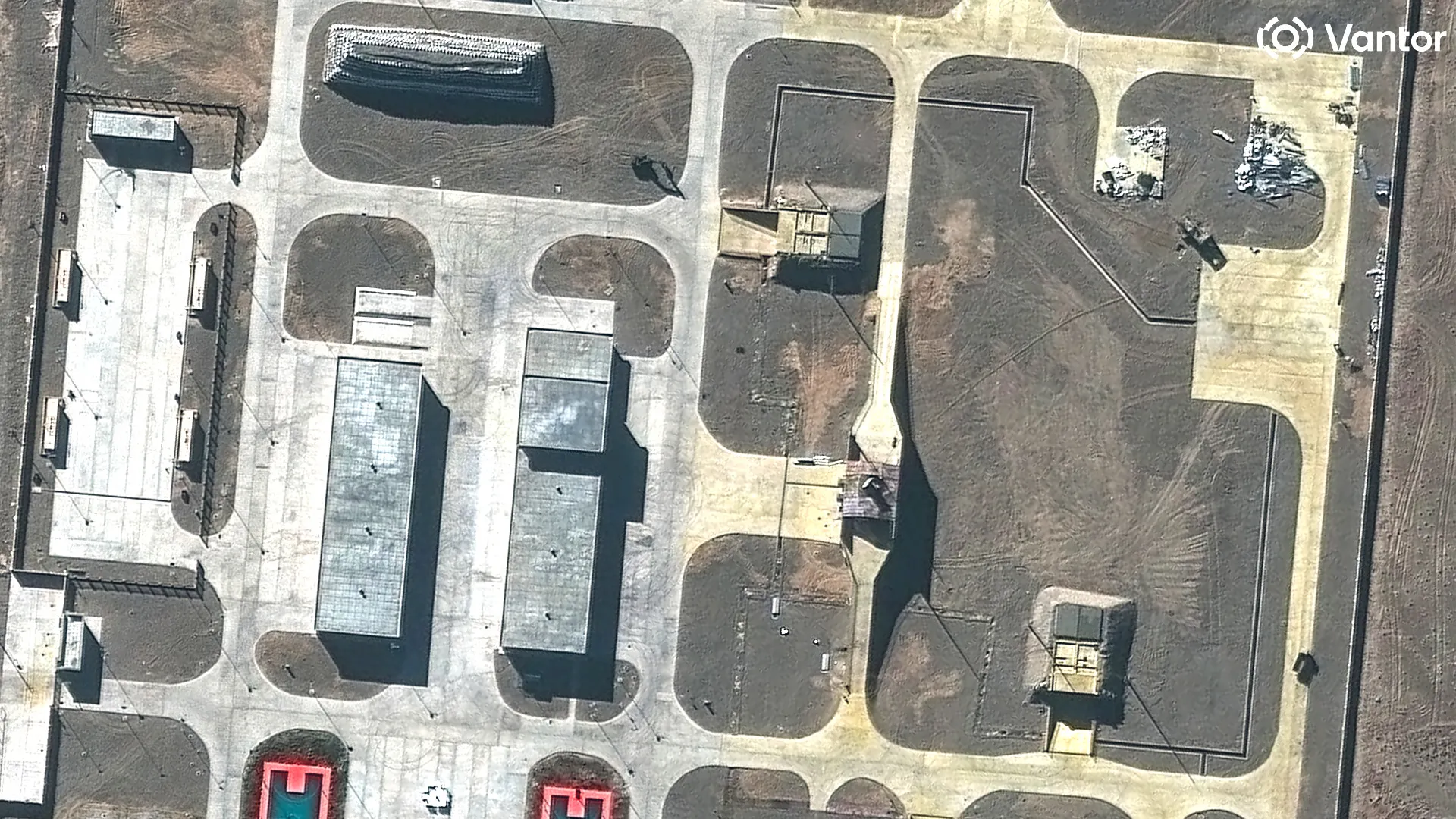
China is building at least two new air defense sites near the India-China border, specifically in Gar County and near the eastern edge of Pangong Lake in Tibet. These modern facilities feature hardened shelters with retractable roofs that enable surface-to-air missiles to be launched from transporter-erector-launchers safely concealed and protected inside. This design provides enhanced protection for missile systems, limits detection by adversaries, and increases operational readiness amid harsh weather and geographical challenges.
These sites form part of China’s expanding military infrastructure along the disputed Line of Actual Control (LAC), aiming to extend the People’s Liberation Army’s air defense range deeper into contested territory. The installations include command centers, barracks, vehicle and ammunition storage, and radar positions, reflecting China’s efforts to fortify its military presence to counter Indian forces near the border, including near India’s upgraded Nyoma airbase across the LAC. The protective shelters complicate enemy attempts to target the missile launchers and shield equipment from environmental threats.
This development reflects a new strategic pattern in Chinese air defense positioning and signals a significant elevation in military preparedness amid ongoing border tensions with India.
Satellite imagery sources and dates for the new Chinese air defense sites near the India-China border are as follows:
-
Commercial satellite imagery from Planet Labs and Maxar Technologies captured in mid to late October 2025 has been analyzed to reveal the construction of the sites near Pangong Lake and Gar County.
-
Specific dated images from October 15 to October 24, 2025, show clear evidence of retractable missile shelters and expanded military infrastructure in these locations.
-
Analysis by defense research groups and independent satellite image analysts were widely published in late October 2025, with accompanying imagery released on October 23-27, 2025 confirming these developments.
-
Open-source intelligence platforms like Civiclens and social media reports have shared processed satellite images highlighting these new constructions between October 23-26, 2025.
These sources provide up-to-date confirmation through high-resolution satellite imagery of China’s expanding air defense installations near the Line of Actual Control.
Additional information on China’s new air defense sites near the India-China border includes:
-
The installations are part of a broader strategic push by China to strengthen its capabilities along the disputed LAC, responding to Indian infrastructure upgrades and military deployments nearby.
-
These sites significantly enhance China’s air defense coverage, allowing quicker response times against potential aerial threats and increasing the survivability of key missile assets with retractable shelters.
-
The move is viewed as escalating the militarization of the border region amidst ongoing diplomatic and military stand-offs, with India closely monitoring and upgrading its own defenses in response.
-
Analysts suggest that these hardened shelters could protect Chinese missile systems from precision strikes and aerial reconnaissance, complicating India’s intelligence and attack planning.
-
The facilities support not only air defense missiles but also radar and communication arrays, forming an integrated network that boosts the overall command and control effectiveness in the area.
-
This development aligns with China’s broader border infrastructure enhancements, including roads, tunnels, and airbases, consolidating its operational posture in Tibet.
India’s strategic responses include upgrading forward airbases, deploying advanced surveillance, and enhancing rapid troop mobilization to maintain parity and deterrence along the LAC.