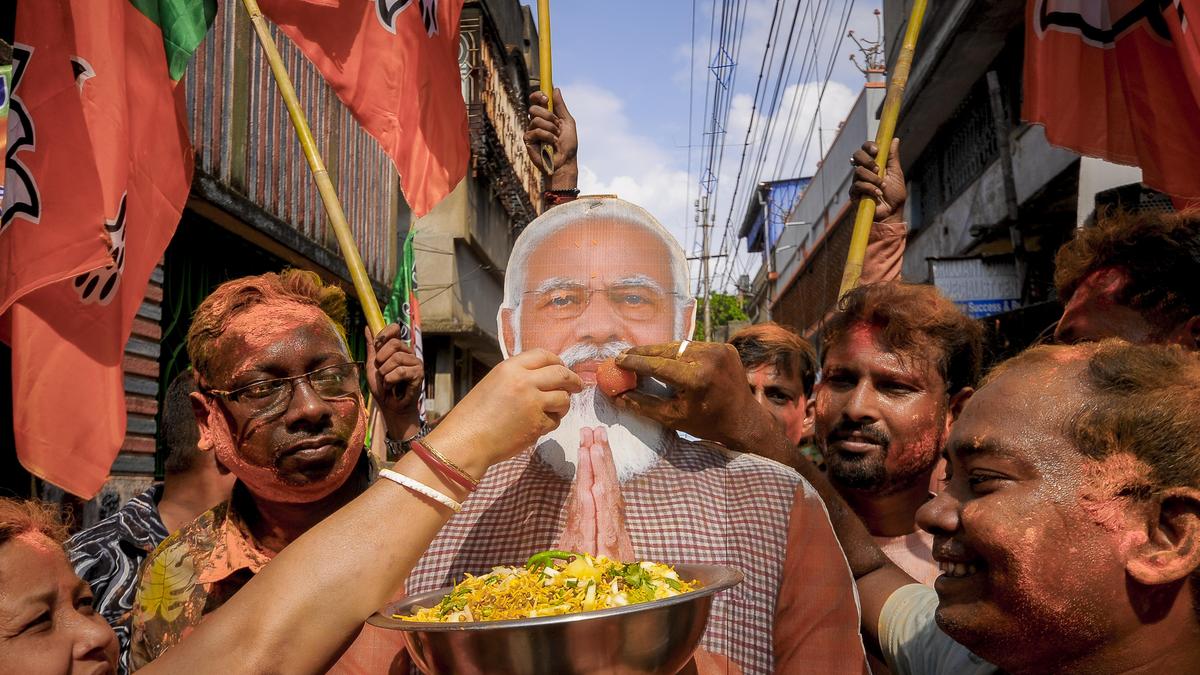
The emergence of the Bharatiya Janata Party (BJP) as a formidable force in West Bengal politics represents more than just electoral success—it signals a paradigm shift in India’s political landscape. Traditionally dominated by regional heavyweights like the Mamata Banerjee-led All India Trinamool Congress, West Bengal has long been perceived as resistant to the BJP’s ideological and organisational expansion. However, recent electoral gains by the Bharatiya Janata Party have disrupted this narrative, redefining both regional and national political equations.
Historical Context: From Margins to Mainstream
For decades, West Bengal’s political sphere was shaped by leftist ideologies under the Communist Party of India (Marxist), followed by the rise of the Trinamool Congress. The BJP, once a marginal player in the state, struggled to gain electoral traction due to cultural, linguistic, and ideological differences.
However, the party’s gradual vote share increase, strategic grassroots expansion, and targeted campaigning have enabled it to transition from a peripheral entity to a principal opposition force. This shift is not merely numerical—it reflects a deeper transformation in voter sentiment and political alignment.
Key Factors Behind BJP’s Rise
1. Strategic Political Expansion
Under the leadership of Narendra Modi and Amit Shah, the BJP has executed a meticulously planned expansion strategy. By focusing on booth-level management, cadre development, and targeted outreach, the party has built a strong organisational presence in West Bengal.
2. Polarization and Identity Politics
The BJP’s emphasis on nationalism, cultural identity, and religious narratives has resonated with sections of the electorate. This approach has helped consolidate votes in regions where identity politics plays a significant role.
3. Anti-Incumbency Sentiment
After years of governance by the Trinamool Congress, anti-incumbency factors such as allegations of corruption, governance issues, and political violence have contributed to voter dissatisfaction. The BJP effectively capitalized on these sentiments to position itself as a viable alternative.
4. Central Welfare Schemes
The promotion of central government initiatives—such as infrastructure development, financial inclusion, and social welfare programs—has strengthened the BJP’s appeal among rural and economically weaker sections.
Electoral Impact and Changing Dynamics
The BJP’s performance in the West Bengal elections has had far-reaching implications:
- Bipolar Politics: The state is transitioning from a multi-party contest to a more bipolar structure dominated by the BJP and Trinamool Congress.
- Decline of the Left and Congress: Traditional players like the Indian National Congress and CPI(M) have witnessed significant erosion in their voter base.
- Increased Political Competition: The intensified rivalry has led to higher voter engagement and political mobilisation.
National Implications of the Shift
The BJP’s success in West Bengal is not an isolated phenomenon—it has broader implications for Indian national politics:
Strengthening National Footprint
Expanding into eastern India enhances the BJP’s pan-India presence, reducing its dependence on traditional strongholds in the north and west.
Strategic Momentum for Future Elections
The gains in West Bengal serve as a template for expansion into other regional strongholds where the BJP previously had limited influence.
Ideological Penetration
The party’s ability to make inroads into a culturally distinct state demonstrates its capacity for ideological adaptation and outreach.
Challenges Ahead
Despite its progress, the BJP faces several challenges in consolidating its position:
- Cultural Integration: Aligning its messaging with Bengal’s unique cultural and intellectual traditions remains critical.
- Organisational Stability: Sustaining grassroots momentum requires consistent cadre engagement and leadership development.
- Counter-Strategies by Opponents: The Trinamool Congress continues to maintain a strong base and is likely to refine its strategies to counter the BJP’s rise.
Conclusion
The BJP’s rise in West Bengal marks a significant turning point in Indian politics, symbolizing a shift from regional dominance to competitive multipolarity. While it may not yet have fully displaced entrenched political forces, its growing influence underscores a changing electoral landscape driven by evolving voter aspirations, strategic political manoeuvring, and national-level dynamics.
As West Bengal continues to evolve politically, the state will remain a critical battleground shaping the future trajectory of the Bharatiya Janata Party and its role in India’s democratic framework.