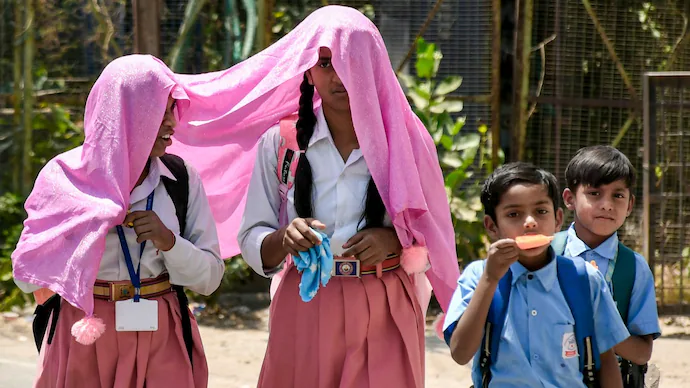
India is experiencing increasingly severe and early heatwaves, with temperatures in several regions soaring well above seasonal norms as early as April. Traditionally, school summer vacations in India begin in May or June, aligning with historical climate patterns. However, with climate dynamics shifting rapidly, the question arises: Is it time to rethink the academic calendar to better protect students from extreme heat?
🌡️ The Changing Nature of Heatwaves in India
In recent years, heatwaves across India have become more frequent, intense, and prolonged. Meteorological data indicate that peak summer temperatures are arriving earlier than expected, often in April rather than May or June. Regions like north, central, and parts of south India are already witnessing temperatures exceeding 40°C during what used to be relatively moderate pre-summer weeks.
This shift is largely attributed to broader climate change patterns, including rising global temperatures, urban heat island effects, and changing monsoon cycles. For school-going children, especially those in non-air-conditioned classrooms, these conditions can be physically exhausting and potentially dangerous.
🏫 Current School Calendar vs Ground Reality
Most Indian schools follow a calendar where:
- Academic sessions begin in June
- Summer vacations occur in May and early June
- April is typically a full academic month, often with exams or new term preparations
However, April is no longer a “mild” month. In many states, students attend classes during peak daytime heat, often commuting long distances. Schools without adequate cooling infrastructure expose children to:
- Dehydration and heat exhaustion
- Reduced concentration and academic performance
- Increased risk of heatstroke
This mismatch between calendar design and climate reality is becoming increasingly problematic.
⚠️ Health Risks for Students
Children are particularly vulnerable to extreme heat due to their lower heat tolerance and higher risk of dehydration. Prolonged exposure to high temperatures can lead to:
- Heat cramps and fatigue
- Heatstroke (a medical emergency)
- Worsening of existing health conditions
- Cognitive fatigue impacting learning outcomes
Additionally, many schools in India lack proper ventilation, cooling systems, or access to consistent drinking water—compounding the risks.
📊 Why Rethinking Summer Vacations Makes Sense
1. Aligning with Climate Trends
Shifting summer vacations to start in mid-April instead of May could help avoid peak heat exposure.
2. Improving Learning Efficiency
Extreme heat significantly reduces student focus and teacher productivity. A climate-aligned calendar could improve overall academic effectiveness.
3. Reducing Health Incidents
Fewer school days during extreme heat means a lower risk of heat-related illnesses.
4. Flexibility in Academic Planning
Schools can compensate by:
- Starting the academic year earlier
- Extending sessions post-monsoon
- Incorporating hybrid or remote learning during peak heat
🏛️ What Are Governments and Schools Doing?
Some Indian states have already taken reactive steps, such as:
- Declaring early summer vacations during severe heatwaves
- Reducing school hours (half-day schedules)
- Issuing health advisories
However, these measures are often temporary and reactive, not systemic. There is currently no nationwide policy to proactively adjust school calendars based on climate data.
🔄 Challenges in Changing the Academic Calendar
While the idea is logical, implementation comes with constraints:
- Board exam schedules (CBSE, state boards) are fixed and influence school timelines
- Parental work schedules may not align with earlier vacations
- Infrastructure limitations for hybrid or flexible learning
- Coordination across states with varying climate patterns
Despite these challenges, the growing severity of heatwaves makes it necessary to explore adaptive and region-specific solutions.
💡 Possible Solutions Going Forward
To address the issue holistically, policymakers and educational institutions could consider:
- Region-specific academic calendars based on climate zones
- Heat action plans for schools, similar to city-level heatwave plans
- Investment in cooling infrastructure (fans, ventilation, shaded areas)
- Encouraging early morning school hours during peak summer
- Integrating remote learning options during extreme weather days
📌 Final Thoughts
The intensifying April heatwaves are not just a temporary inconvenience—they are a structural challenge that demands long-term planning. India’s education system must evolve to reflect the realities of a warming climate.
Rethinking summer vacation timing is no longer just a logistical consideration—it is a public health priority. By aligning school calendars with climate patterns, India can ensure safer learning environments while maintaining academic continuity.