Delhi’s air quality plunged to alarming levels on Diwali 2025, with 34 out of 38 monitoring stations recording pollution levels in the “red zone”, denoting very poor to severe air quality conditions.
Delhi’s air quality significantly worsened on Diwali 2025, with 34 out of 38 monitoring stations in the national capital recording pollution levels in the ‘red zone,’ indicating ‘very poor’ to ‘severe’ air quality.
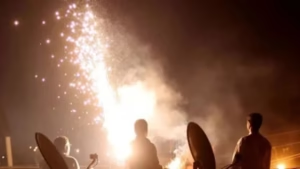
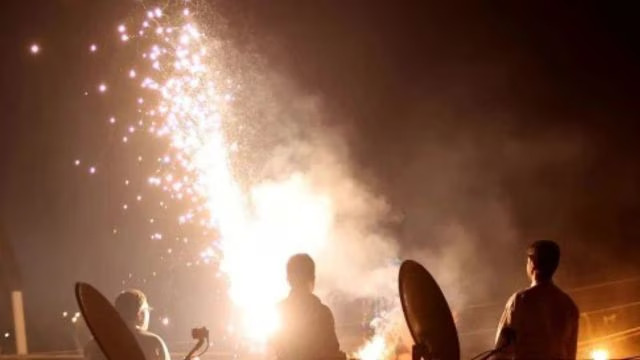
The city’s 24-hour average Air Quality Index (AQI) reached around 345, up from 326 the previous day, with four stations entering the ‘severe’ category with AQI above 400—Wazirpur (423), Dwarka (417), Ashok Vihar (404), and Anand Vihar (404). This deterioration came despite a Supreme Court order permitting only ‘green’ firecrackers during limited hours; however, many residents burst crackers beyond the allowed timeframe, contributing to toxic haze.
Transport emissions and industrial activities also contributed to pollution amid stagnant weather conditions typical in the post-Diwali winter period. The pollution spike post-Diwali puts vulnerable populations at health risk, and authorities expect the air quality to remain poor or worsen in the following days, implementing measures like the Graded Response Action Plan (GRAP) to mitigate pollution levels.
Key Facts
-
34 of 38 stations in the red zone (very poor to severe AQI levels)
-
AQI average around 345 (very poor category)
-
Four stations severely polluted (AQI >400)
-
Violation of Supreme Court mandate on firecracker usage
-
Contribution from transport (15.6%) and industry (23.3%)
-
GRAP measures activated, with further deterioration expected
This situation marks one of the worst post-Diwali pollution episodes in recent years for Delhi.
Contributing Factors
-
Major contributors included firecracker emissions, vehicular pollution (15.6%), and industrial activity (23.3%), according to the Decision Support System (DSS) report.
-
Added haze from stubble burning in Punjab and Haryana exacerbated Delhi’s pollution load, forming a toxic mix over the NCR.
Government and Public Health Response
-
The Commission for Air Quality Management (CAQM) enforced Stage II of the Graded Response Action Plan (GRAP), restricting construction activities and mandating stricter vehicular controls.
-
Health experts issued warnings that such AQI levels can cause severe respiratory distress, especially for children, the elderly, and those with lung diseases
-
Broader Context
Despite the Supreme Court permitting only “green crackers,” widespread violations occurred, leading to pollution peaks 15–20 times above safe PM2.5 limits in parts of the city such as Anand Vihar and Jahangirpuri.
Authorities have proposed artificial rain as an emergency measure if conditions worsen further this week.