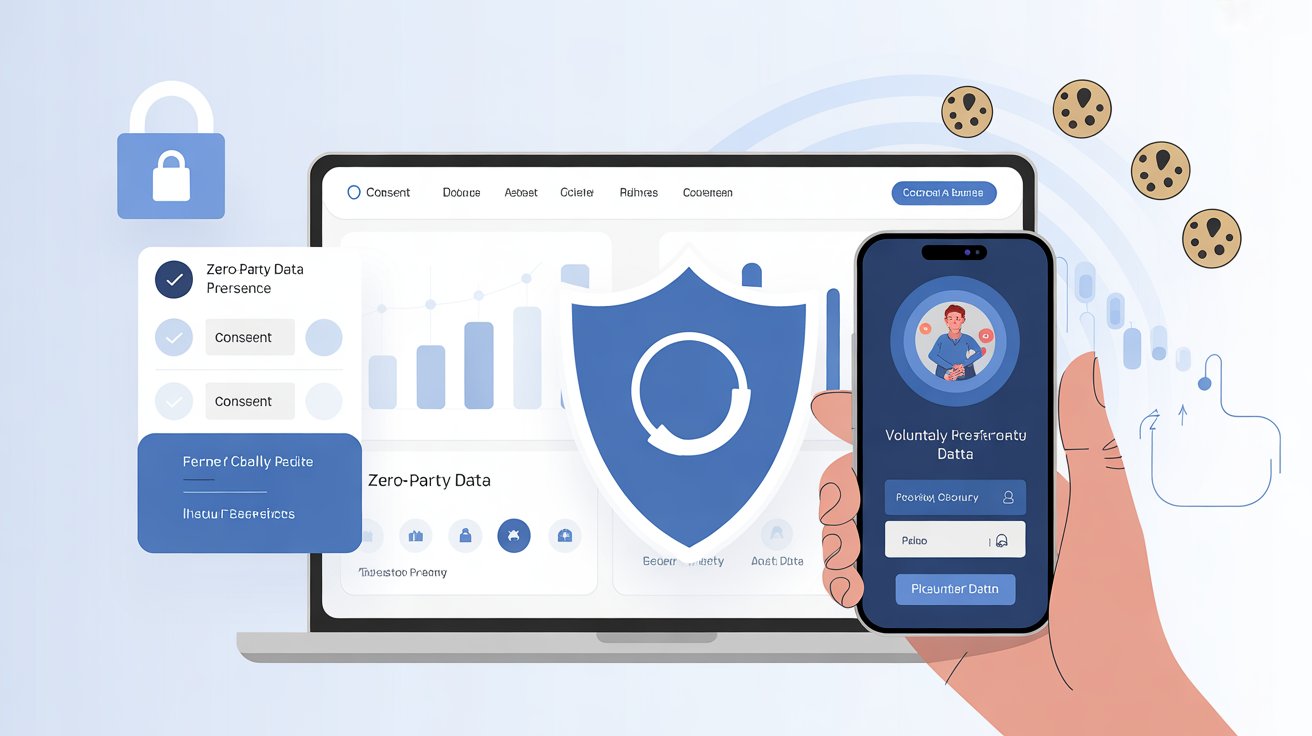
The digital marketing ecosystem is undergoing a structural shift. With third-party cookie deprecation led by browsers like Google Chrome, Safari, and Mozilla Firefox, businesses can no longer rely on passive cross-site tracking to power personalization and targeting. Simultaneously, privacy regulations such as the General Data Protection Regulation and the California Consumer Privacy Act have raised the compliance bar.
In this privacy-first era, zero-party data has emerged as a sustainable, ethical, and high-accuracy alternative.
This article explores what zero-party data is, why it matters after cookie deprecation, and how businesses can collect first-hand consumer insights ethically and effectively.
What Is Zero-Party Data?
Zero-party data refers to information that customers intentionally and proactively share with a brand. Unlike third-party data (purchased from aggregators) or inferred behavioural data, zero-party data is explicitly provided by the consumer.
Examples include:
-
Preference selections (e.g., favourite categories)
-
Communication preferences
-
Purchase intentions
-
Survey responses
-
Feedback forms
-
Personalization quiz answers
The defining characteristic: explicit consent and voluntary disclosure.
Why Zero-Party Data Is Critical After Cookie Deprecation
The elimination of third-party cookies reduces visibility into cross-platform behaviour. Brands must now build direct relationships rather than depend on opaque tracking mechanisms.
Zero-party data offers:
1. Higher Accuracy
Consumers state their preferences directly, eliminating guesswork.
2. Stronger Compliance
Because it is voluntarily shared, it aligns with consent-based regulatory frameworks.
3. Better Personalization
Intent-based insights outperform probabilistic targeting.
4. Increased Trust
Transparency fosters brand credibility and long-term loyalty.
In short, zero-party data shifts the focus from surveillance-based marketing to relationship-based marketing.
Ethical Principles for Collecting Zero-Party Data
Ethical data collection is not just regulatory compliance — it is strategic positioning.
1. Transparency First
Clearly communicate:
-
What data are you collecting?
-
Why are you collecting it?
-
How it will be used
-
How long will it be retained?
Avoid vague disclosures buried in policy pages.
2. Explicit Consent
Opt-in mechanisms should be:
-
Clear
-
Granular
-
Revocable
Never pre-check consent boxes or obscure terms.
3. Value Exchange
Consumers share information when they perceive value. Offer:
-
Personalized recommendations
-
Exclusive content
-
Discounts or loyalty benefits
-
Early product access
Zero-party data collection must feel reciprocal, not extractive.
High-Impact Zero-Party Data Collection Strategies
Below are practical strategies businesses can implement immediately.
1. Interactive Quizzes & Preference Centres
Interactive tools collect structured data while enhancing engagement.
Examples:
-
“Find Your Perfect Product” quizzes.
-
Style or taste preference selectors
-
Personalized onboarding questionnaires
Preference centres allow users to define:
-
Content frequency
-
Topic interests
-
Channel preferences
This reduces unsubscribe rates and improves targeting accuracy.
2. Progressive Profiling
Instead of overwhelming users with long forms, collect data gradually over time.
For example:
-
First interaction: Email only
-
Second interaction: Product interest
-
Third interaction: Budget range or use case
This approach improves completion rates and respects user friction thresholds.
3. Loyalty & Membership Programs
Membership ecosystems incentivize data sharing through structured rewards.
Data points collected may include:
-
Purchase motivations
-
Usage frequency
-
Lifestyle indicators
-
Referral patterns
The key is offering clear benefits in exchange — such as tiered rewards, exclusive access, or VIP experiences.
4. Post-Purchase Feedback Loops
Post-transaction surveys are a rich source of zero-party data.
Collect:
-
Satisfaction ratings
-
Product improvement suggestions
-
Purchase drivers
-
Future buying intent
Short, contextual surveys outperform generic feedback forms.
5. Gated Premium Content
For B2B organisations, whitepapers, webinars, and research reports are powerful data collection touchpoints.
Instead of asking only for contact information, consider:
-
Role/function
-
Industry
-
Business challenges
-
Budget cycle stage
This allows segmentation based on explicit buyer signals.
Leveraging Zero-Party Data for Strategic Advantage
Collecting data is only the first step. Strategic execution requires integration.
1. CRM & CDP Integration
Unify zero-party inputs with first-party behavioural data to create holistic profiles.
2. Personalization Engines
Use declared preferences to tailor:
-
Website content
-
Email campaigns
-
Product recommendations
-
Paid media messaging
3. Segmentation Based on Intent
Segment customers not only by demographics but by stated intent and goals.
Intent-based segmentation increases conversion rates significantly compared to inferred segmentation.
Common Mistakes to Avoid
-
Over-collection without a clear purpose
-
Asking redundant questions
-
Failing to act on shared preferences
-
Hiding consent mechanisms
-
Treating zero-party data as static rather than evolving
Trust erodes quickly when consumers feel their information is ignored or misused.
The Future: Consent-Driven Marketing
The post-cookie era marks a philosophical shift. Marketing success will depend on:
-
Transparency over opacity
-
Value exchange over surveillance
-
Relationship-building over algorithmic dependency
Zero-party data is not merely a compliance workaround — it is a strategic asset.
Brands that embrace ethical, consent-based data strategies will gain:
-
Higher customer lifetime value
-
Stronger retention rates
-
Reduced regulatory risk
-
Improved campaign performance
The businesses that thrive in this new landscape will be those that treat consumer data as a shared asset, not a harvested resource.
Final Thoughts
Zero-party data represents the evolution of digital marketing in a privacy-conscious world. After cookie deprecation, businesses must pivot from third-party tracking to direct, trust-based engagement models.
By implementing transparent consent frameworks, delivering real value, and integrating zero-party data into personalization strategies, organisations can build sustainable competitive advantage — ethically and effectively.
The future belongs to brands that earn data, not extract it.