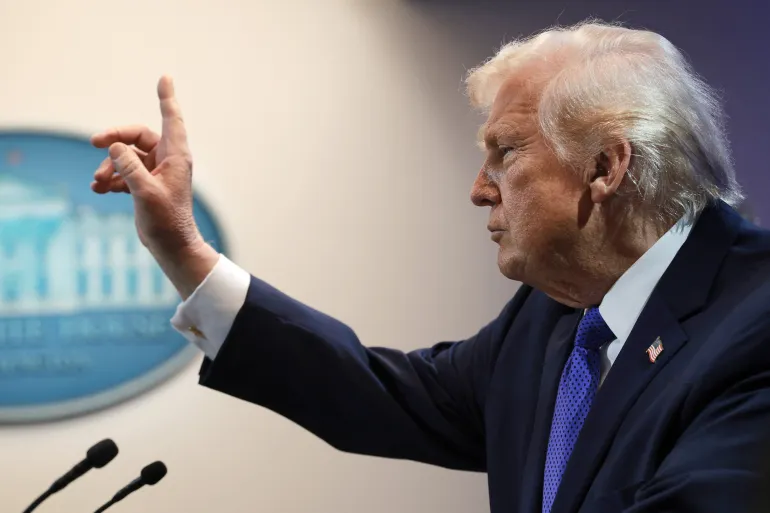
In a decision that is already reshaping global trade discussions, the Supreme Court of the United States has limited the scope of tariff authority exercised under former President Donald Trump. The ruling has triggered swift international reactions, with some countries welcoming the move as a stabilizing force for global commerce, while others are reassessing trade agreements and evaluating potential economic impacts.
The decision centres on executive authority in imposing tariffs without explicit congressional approval. By narrowing the legal interpretation of presidential tariff powers, the court has introduced fresh clarity into a trade environment that has seen years of uncertainty, retaliatory duties, and supply chain disruptions.
Understanding the Supreme Court Ruling
During the Trump administration, tariffs were imposed on a wide range of imports under national security and trade imbalance justifications. These measures affected major trading partners and sparked prolonged disputes.
The Supreme Court’s recent ruling effectively curtails the executive branch’s ability to unilaterally expand tariff measures without legislative backing. Legal analysts suggest the decision reinforces constitutional checks and balances, particularly regarding Congress’s authority over taxation and international commerce.
This ruling does not immediately remove existing tariffs, but it limits future expansions under similar legal frameworks. For global markets, the distinction is critical: the policy environment may now be more predictable.
Global Reactions: Relief and Recalibration
Countries Welcoming the Decision
Several US trading partners have responded positively. Governments in export-heavy economies see the ruling as a potential de-escalation of trade tensions that disrupted global supply chains over the past few years.
Business associations in Asia and Europe noted that greater predictability in US trade policy could improve investment planning, pricing stability, and long-term procurement strategies. For multinational corporations, tariff volatility had complicated logistics, sourcing decisions, and cost forecasting.
Financial markets in some regions reacted cautiously but optimistically, interpreting the ruling as reducing the likelihood of sudden tariff escalations.
Countries Reviewing Trade Deals
Not all responses were celebratory. Some governments are carefully reviewing existing bilateral and multilateral trade arrangements to assess economic exposure.
During Trump’s presidency, tariff negotiations often became leverage points in broader trade discussions. The Supreme Court’s ruling may shift that dynamic, reducing executive bargaining flexibility in future disputes.
Trade ministries in emerging markets are conducting impact assessments to determine whether previously negotiated concessions remain viable. Analysts suggest that while the ruling promotes legal clarity, it may also alter geopolitical trade strategy calculations.
Economic Implications: Short-Term Stability, Long-Term Adjustments
Impact on US Businesses
For US importers and manufacturers reliant on global supply chains, the decision could reduce regulatory uncertainty. Companies that absorbed higher input costs due to tariffs may now see a more stable policy landscape, although existing tariffs remain in place unless modified through legislative or executive action consistent with the ruling.
Small and mid-sized enterprises, which were disproportionately affected by tariff-related cost increases, may benefit most from improved predictability.
Global Supply Chains
Global supply chains, already recalibrated due to pandemic disruptions and geopolitical tensions, could experience further adjustments. Firms that diversified sourcing away from tariff-affected regions may reconsider strategies if future tariff expansions become less likely.
However, experts caution that trade policy remains influenced by political cycles, diplomatic relations, and national security considerations. The court’s decision narrows authority but does not eliminate tariff tools.
Political and Legal Significance
The ruling carries broader constitutional implications. By reinforcing congressional oversight in tariff decisions, the Supreme Court underscores the separation of powers framework within US governance.
Policy experts note that future administrations—regardless of political affiliation—may need to coordinate more closely with Congress before implementing sweeping trade restrictions.
The decision also sets a legal precedent that may shape future litigation involving executive authority over trade and economic policy.
Market and Investor Outlook
Investors are closely monitoring the policy shift. Trade-sensitive sectors—including manufacturing, agriculture, automotive, and technology—are likely to assess exposure to potential regulatory adjustments.
Currency markets and commodity prices could see gradual stabilization if tariff unpredictability declines. However, analysts emphasize that broader macroeconomic variables—such as inflation trends, interest rates, and geopolitical tensions—remain dominant forces in shaping global trade flows.
What Happens Next?
While the ruling limits executive tariff expansion, its practical effects will unfold over time. Key questions include:
-
Will Congress introduce new trade legislation?
-
Could future administrations pursue alternative legal avenues for tariffs?
-
How will trading partners recalibrate bilateral agreements?
Global policymakers are expected to continue monitoring the legal landscape as they evaluate trade strategies and economic forecasts.
Conclusion
The Supreme Court’s decision to limit tariff authority under former President Donald Trump represents a significant moment in US trade law and global economic governance. While some countries welcome the ruling as a step toward policy stability, others are reassessing trade agreements and long-term strategies.
For businesses, investors, and policymakers worldwide, the decision introduces a new phase in global trade relations—one shaped by constitutional boundaries, legislative oversight, and evolving economic realities.
As international markets adapt, the broader message is clear: trade policy remains central to geopolitical and economic stability, and legal clarity may now become as influential as political negotiation.