In a major geopolitical and economic shift, U.S. President Donald Trump announced a breakthrough trade agreement with India, a move widely seen as a strategic response to India’s recently concluded trade deal with the European Union and a bid to ensure the United States maintains influence in the global economic landscape.
Trump’s announcement, made via his social media platform Truth Social following a phone call with Indian Prime Minister Narendra Modi, marks a significant turnaround in bilateral relations that had been under strain due to tariff disputes and broader diplomatic tensions.
What the Trade Deal Entails
According to Trump, the agreement immediately reduces U.S. tariffs on Indian imports from a punitive 25% to 18%, effective immediately, a figure that dramatically lowers the cost of Indian goods entering the American market.
In return, Trump said India would take steps to lower trade barriers on American goods, with Modi allegedly agreeing to reduce or eliminate tariffs on U.S. products—reportedly to “zero” on many categories. Trump also claimed India would commit to buying more than $500 billion worth of American products, including energy, technology, agriculture, and industrial goods, although independent confirmation from New Delhi on these figures remains pending.
Trump framed the deal not just in economic terms but as part of a broader diplomatic strategy. He asserted that India had agreed to halt purchases of Russian oil and instead boost imports of energy from the United States—and potentially Venezuela. Trump linked this shift to U.S. efforts to weaken Russia’s economic position amid the ongoing conflict in Ukraine.
A Strategic Pivot After Tensions
The trade agreement comes after months of diplomatic and trade tensions between Washington and New Delhi. In 2025, the Trump administration imposed exceptionally steep tariffs—peaking at 50% on some Indian goods—largely tied to India’s continued importation of Russian energy and perceived barriers to U.S. products. India criticized those tariffs as unfair and economically damaging.
This new deal signals a de-escalation of that dispute, realigning U.S.–India trade relations at a time when India is also pursuing economic partnerships with Europe. Just days earlier, India and the European Union announced a long-anticipated free trade agreement, concluding nearly two decades of negotiations and positioning the EU as a major economic partner.
Trump’s move to secure a separate deal with India appears partly motivated by a desire to ensure the United States does not cede influence in Asia and global markets—especially as European nations deepen their economic ties with New Delhi.
Economic Implications and Market Reactions
The announcement had immediate impacts on financial markets. India’s benchmark equity index, the Nifty 50, surged by more than 2%, while the Indian rupee recorded its largest one-day gain in seven years against the U.S. dollar. Business leaders and investors have interpreted the tariff reduction and improved trade relations as a positive signal for cross-border commerce and economic growth.
However, analysts caution that many details of the arrangement remain unclear, and much depends on formal ratification, implementing text, and reciprocal commitments from both sides. Some commentators have noted that while the tariff cut and trade pact are promising, the actual economic benefits will vary across sectors, especially in politically sensitive areas like agriculture and manufacturing.
Diplomacy, Politics, and Global Strategy
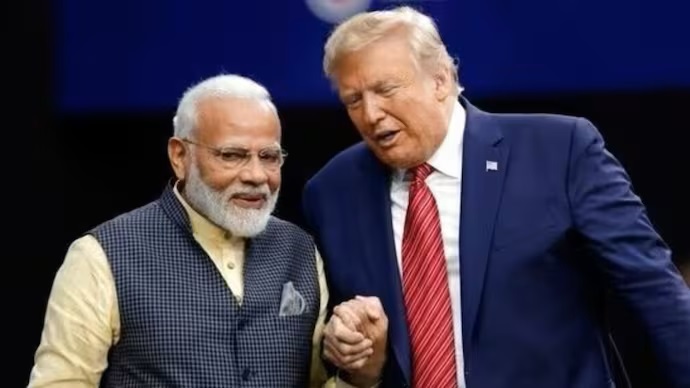
Trump emphasized the personal rapport between him and Modi, describing their relationship as rooted in “friendship and respect” and suggesting it was central to reaching a deal. Modi, for his part, publicly thanked Trump and highlighted the importance of cooperation between two of the world’s largest democracies.
Strategically, the Trump administration’s move is also seen as part of broader efforts to balance U.S. global influence against competitive pressures from Europe and China. By reducing trade barriers with India, Washington seeks to deepen economic ties while countering geopolitical shifts that could align India more closely with other global powers.
Looking Ahead
While the U.S.–India trade deal is shaping up as a major foreign policy and economic milestone, the road ahead will require formal negotiations, legislative review, and careful implementation of tariff schedules and market access commitments.
For now, the announcement stands as an assertive diplomatic play by the Trump administration, showcasing how economic policy and strategic competition intersect in the 21st-century global order.