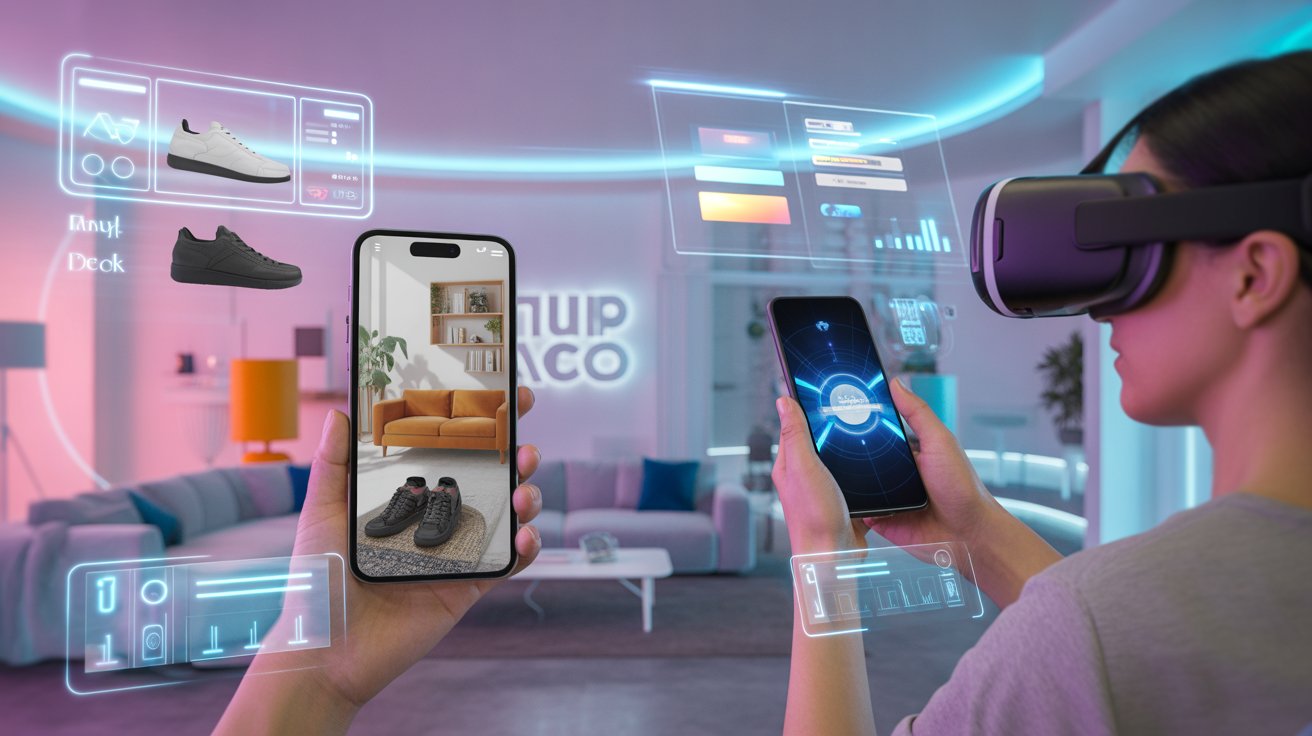
Immersive marketing is rapidly redefining how brands interact with customers. By leveraging Augmented Reality (AR) and Virtual Reality (VR), companies are moving beyond static content and creating interactive, sensory-rich experiences that drive deeper engagement and measurable business outcomes.
As digital fatigue grows and competition for attention intensifies, AR and VR technologies offer brands a powerful differentiation strategy. From virtual try-ons to immersive brand worlds, immersive marketing is no longer experimental—it’s strategic.
What Is Immersive Marketing?
Immersive marketing refers to campaigns that integrate interactive technologies such as AR and VR to create engaging, participatory brand experiences.
-
Augmented Reality (AR): Overlays digital elements onto the real world using smartphones or AR glasses.
-
Virtual Reality (VR): Creates fully immersive digital environments using headsets.
These technologies reduce friction in the buying journey, enhance product visualization, and improve conversion rates by simulating real-world experiences.
Why AR & VR Are Reshaping Marketing
1. Higher Engagement Rates
Interactive experiences command attention longer than static ads.
2. Improved Purchase Confidence
Virtual try-ons and 3D simulations reduce uncertainty, lowering return rates.
3. Stronger Emotional Connection
Immersive storytelling creates memorable brand interactions.
4. Data-Driven Insights
AR/VR campaigns provide behavioural analytics, including dwell time, interaction patterns, and product interest heatmaps.
Case Studies: Brands Leading the AR/VR Revolution
1. IKEA – AR Furniture Placement
Campaign: IKEA Place App
IKEA leveraged AR technology to allow customers to visualize furniture in their homes before purchasing. Using smartphone-based AR, users can place 3D-rendered furniture models in real-world spaces at an accurate scale.
Impact:
-
Reduced buyer hesitation
-
Improved online conversion rates
-
Decreased product returns
-
Enhanced omnichannel experience
By solving a core customer pain point—“Will this fit in my space?”—IKEA turned AR into a revenue-driving tool rather than a novelty feature.
2. Sephora – Virtual Beauty Try-On
Campaign: Sephora Virtual Artist
Sephora introduced AR-powered virtual makeup try-ons via its mobile app. Customers can test lipstick shades, foundation tones, and eye makeup using facial recognition and real-time rendering.
Strategic Benefits:
-
Increased app engagement
-
Higher online purchase rates
-
Reduced in-store sampling dependency
-
Personalized shopping experience
Sephora effectively blended e-commerce and experiential retail through AR integration.
3. Nike – Immersive Product Drops
Nike has used AR experiences for exclusive sneaker launches, allowing users to unlock and purchase limited-edition products via AR-based interactions in specific locations.
Results:
-
Boosted hype and scarcity value
-
Enhanced brand exclusivity
-
Increased digital engagement during product launches
By combining gamification with AR, Nike strengthened its digital-first strategy.
4. BMW – Virtual Showrooms
BMW integrated VR experiences in showrooms and online platforms, allowing customers to explore vehicle interiors, customization options, and features in immersive 3D environments.
Business Outcomes:
-
Improved pre-purchase exploration
-
Reduced the need for physical inventory display
-
Enhanced personalization
Virtual showrooms proved particularly valuable during periods when in-person visits were limited, accelerating digital automotive retail.
5. Gucci – AR Sneaker Try-On
Gucci implemented AR try-on features in its app, allowing customers to virtually “wear” sneakers using smartphone cameras.
Strategic Advantage:
-
Enhanced luxury digital experience
-
Increased mobile app engagement
-
Strengthened Gen Z and millennial brand affinity
Luxury brands are increasingly adopting immersive tools to bridge digital and physical shopping experiences.
Key Trends Driving Immersive Marketing Growth
1. Smartphone AR Accessibility
AR is now widely accessible through mobile devices, eliminating hardware barriers.
2. Metaverse & Virtual Worlds
Brands are experimenting with persistent digital spaces for events, product showcases, and community engagement.
3. AI + AR Integration
Artificial intelligence enhances personalization within immersive environments.
4. Social Media AR Filters
Platforms like Instagram and Snapchat allow branded AR filters, expanding reach and organic user-generated promotion.
Measuring ROI in Immersive Marketing
To justify investment, marketers track:
-
Engagement time
-
Conversion rate uplift
-
Cart abandonment reduction
-
Product return decreases
-
Social sharing metrics
-
Brand recall and sentiment analysis
When implemented strategically, AR/VR campaigns often outperform traditional digital advertising in engagement depth and experiential impact.
Challenges to Consider
Despite its benefits, immersive marketing presents operational considerations:
-
Development costs
-
Technology compatibility
-
User adoption rates
-
Data privacy compliance
Brands must align immersive experiences with clear business objectives rather than adopting technology purely for novelty.
The Future of Immersive Marketing
AR and VR are shifting from experimental marketing tactics to essential engagement tools. As hardware becomes more affordable and 5G networks enhance real-time rendering capabilities, immersive marketing will become mainstream across retail, automotive, real estate, tourism, and education sectors.
Forward-thinking brands that integrate immersive experiences into their digital strategy will gain a competitive advantage by delivering memorable, interactive, and data-driven customer journeys.
Final Thoughts
The rise of immersive marketing demonstrates that the future of brand engagement lies in participation, not passive consumption. Companies like IKEA, Sephora, Nike, BMW, and Gucci illustrate how AR and VR can drive measurable business impact.
For marketers seeking higher engagement, stronger emotional resonance, and improved conversion performance, immersive marketing is not just a trend—it is a strategic evolution in digital customer experience.