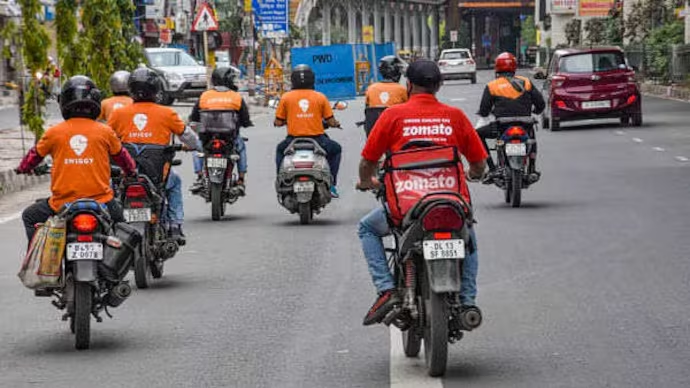
As India prepared to celebrate New Year’s Eve on December 31, 2025, millions of users of food delivery and quick commerce services were met with an unexpected disruption: delivery workers associated with Swiggy, Zomato, Amazon, Blinkit, Zepto and other platforms launched a nationwide strike. The action — timed deliberately on one of the busiest nights for orders — underscores growing unrest in India’s gig economy over earnings, safety, and labour rights.
What Sparked the Strike?
Delivery workers, often classified as “gig partners” rather than employees, have long voiced dissatisfaction with the terms of engagement on app-based platforms. The December 31 strike follows a similar protest held on December 25 and represents an escalation of demands. According to union leaders, over 1.5 lakh to nearly 1.7 lakh workers across major urban centres were expected to participate in the strike by logging out of delivery apps or significantly reducing their workload.
Industry bodies such as the Telangana Gig and Platform Workers’ Union (TGPWU) and the Indian Federation of App-Based Transport Workers (IFAT) organised the protest to spotlight long-standing grievances against the delivery platforms.
Core Demands of the Delivery Workers
The strike centres on a set of focused demands aimed at improving the working conditions and economic security of gig workers. The key demands include:
1. Fair and Transparent Pay Structures
Workers want a shift away from unpredictable, commission-based earnings toward stable and transparent pay per delivery or a minimum guaranteed income. Many cite falling incentive rates and intense competition as reasons their real earnings have stagnated or dropped.
2. Ban on ‘10-Minute Delivery’ Targets
One of the most publicised demands is the removal of extreme delivery targets such as the “10-minute delivery” option. Workers argue that such tight timelines put undue pressure on them, leading to unsafe riding conditions and increased risk of accidents.
3. Safety and Working Conditions
Beyond delivery speed targets, workers want better overall safety measures, such as rest breaks, reasonable working hours, functional grievance redressal systems, and protections from algorithm-based penalties.
4. End to Arbitrary Account Blocking
Delivery workers complain that their accounts can be blocked or deactivated by platforms without clear explanations or processes for appeal — suddenly depriving them of income with little recourse.
5. Social Security and Labour Rights
Perhaps the most transformative demand is for formal recognition of gig workers under labour law, which would entitle them to basic protections such as insurance, health care, pension contributions, gratuity, emergency leave and collective bargaining rights. Unions also want portable social-security benefits under schemes like e-Shram.
Collectively, these demands challenge the current gig economy business model, which treats delivery partners as independent contractors without traditional employee protections.
How Platforms Have Responded
In anticipation of the strike and to mitigate disruptions during peak demand, major platforms including Zomato and Swiggy offered higher incentives and special payouts for delivery partners on New Year’s Eve. These included increased per-order payments and bonus earning opportunities aimed at encouraging workers to stay active on the apps.
However, unions argue that such festive payouts are short-term fixes that do not resolve the systemic issues around earnings, job security, and safety that underlie gig workers’ grievances.
What This Means for Customers
The strike has had tangible effects on service availability in many cities. With workers logging off or reducing engagement, users reported difficulty placing food, grocery and e-commerce orders on the evening of December 31. Media reports noted delayed or cancelled deliveries, particularly in major cities where demand typically spikes on New Year’s Eve.
These disruptions highlight the essential role gig workers play in everyday convenience and festive celebrations — and the fragility of the delivery ecosystem when labour grievances go unaddressed.
Broader Implications for the Gig Economy
The strike is more than a momentary protest; it underscores a broader reckoning in India’s gig economy. As app-based platforms become central to urban logistics, labour advocates emphasise the urgent need for regulatory frameworks that protect workers’ rights while balancing the operational flexibility prized by technology companies.
If governments, platforms and worker unions can find common ground, future disputes may result in more sustainable terms of engagement, stronger worker protections, and a more equitable gig economy. For now, the nationwide strike has amplified long-suppressed voices within India’s workforce and put gig worker rights firmly on the national agenda.