Every year on March 14, mathematicians, students, and science enthusiasts across the world celebrate Pi Day, a unique occasion dedicated to one of mathematics’ most fascinating numbers—π (pi). What started as a mathematical concept tied to circles has evolved into a global celebration that blends science, culture, and fun activities such as pie-eating contests and digit-memorization challenges.
Pi Day highlights the significance of mathematics in everyday life while encouraging curiosity about numbers that shape our understanding of the world.
What Is Pi and Why Is It Important?
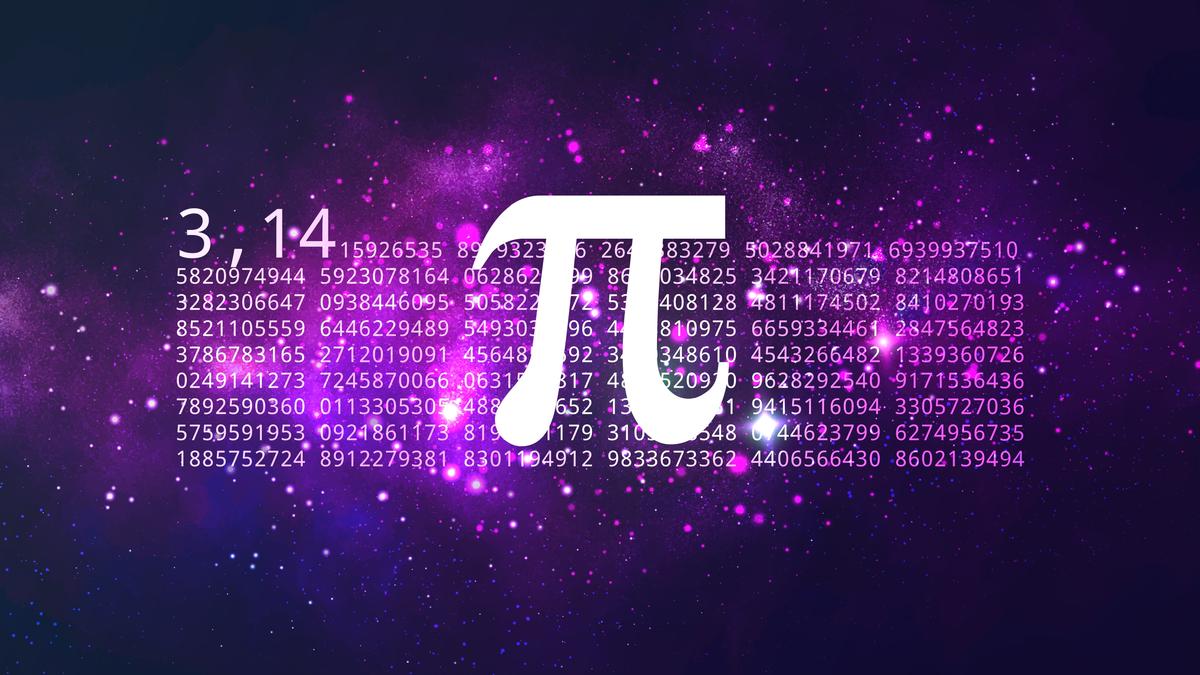
In mathematics, π (pi) represents the ratio of a circle’s circumference to its diameter. Regardless of the size of the circle, this ratio always remains constant. The approximate value of pi is 3.14, which is why March 14 (3/14) is celebrated as Pi Day.
Pi is classified as an irrational and transcendental number, meaning its decimal representation goes on infinitely without repeating patterns. This mysterious nature has fascinated mathematicians for thousands of years and continues to inspire research in mathematics, physics, and engineering.
The constant is essential in many calculations involving circles, waves, and geometry. From calculating the area of a circle to designing satellites and engineering structures, pi plays a crucial role in scientific and technological advancements.
The Ancient Search for Pi
Human fascination with pi dates back to ancient civilisations. Early mathematicians in Babylon and Egypt attempted to approximate the value of pi thousands of years ago using basic geometry.
Later, the Greek mathematician Archimedes made one of the earliest accurate calculations by using polygons to estimate the ratio. His method established that the value of pi lies between 3 1/7 and 3 10/71, bringing mathematicians closer to understanding the constant.
Over centuries, scholars across the world—including prominent Indian mathematicians—made important contributions to improving the accuracy of pi’s value and expanding its applications in mathematics and astronomy.
The Birth of Pi Day
While pi has been studied for millennia, Pi Day itself is relatively modern. The celebration began in 1988, when physicist Larry Shaw organised the first Pi Day event at the Exploratorium science museum in San Francisco.
Participants celebrated by walking around a circular space and enjoying slices of pie—creating a playful connection between the mathematical constant “pi” and the dessert “pie.”
The event gained popularity over the years. In 2009, the United States House of Representatives officially recognised March 14 as National Pi Day, encouraging schools and educational institutions to celebrate mathematics.
Pi Day Becomes a Global Celebration
Today, Pi Day is celebrated worldwide in schools, universities, research institutes, and science communities. Activities often include:
-
Pi memorization competitions
-
Math quizzes and puzzles
-
Educational workshops and lectures
-
Baking and eating pies symbolise the number
-
Creative projects involving circles and geometry
The day also coincides with International Day of Mathematics, which promotes the importance of mathematical thinking in solving real-world problems and advancing technology.
This global recognition has transformed Pi Day into more than just a mathematical observance—it has become a cultural event celebrating the beauty and creativity of mathematics.
Why Pi Continues to Fascinate the World
Pi’s endless decimal expansion has made it a favourite challenge among mathematicians and enthusiasts. Some people even attempt to memorize thousands of digits of pi, turning it into a mental sport.
Beyond mathematics, pi appears in unexpected areas of science, including physics, probability theory, signal processing, and cosmology. Its presence across diverse fields highlights the deep connections between mathematics and the natural world.
Because of this universal relevance, pi has become a symbol of intellectual curiosity and the pursuit of knowledge.
More Than Just a Number
Pi Day reminds us that mathematics is not just about equations and formulas—it is also about creativity, discovery, and celebration. From ancient civilisations calculating circles to modern scientists exploring the universe, pi continues to inspire curiosity and innovation.
What began as a simple mathematical ratio has grown into a worldwide festival that brings people together to appreciate the power of numbers.
So every March 14, whether you are solving equations, learning about geometry, or simply enjoying a slice of pie, you are participating in a celebration that connects mathematics with culture and curiosity.