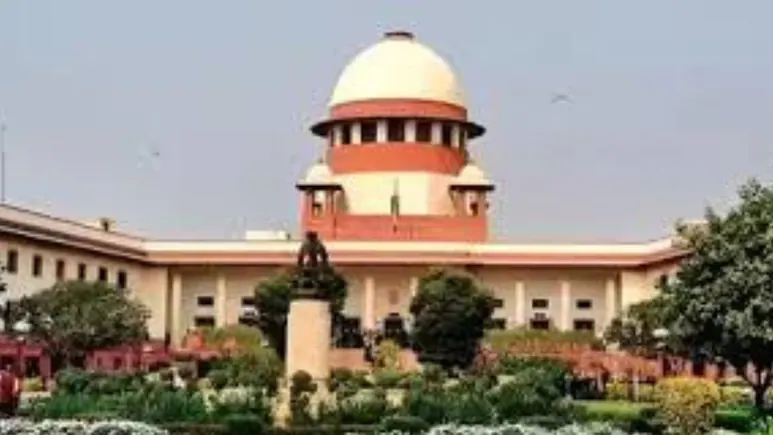
The Indian Supreme Court has delivered a strong rebuke to a Christian Army officer, Lieutenant Samuel Kamalesan, calling him a “misfit for the Army” after he refused a command to enter the sanctum sanctorum of a gurdwara. The court’s ruling affirms the Army’s decision to dismiss Kamalesan, highlighting that individual religious beliefs cannot override military discipline and institutional cohesion.
The Core of the Dispute
Kamalesan was posted in the 3rd Cavalry Regiment, which included Sikh troops, and at his station, there was no “Sarva Dharma Sthal” (a common interfaith place of worship), but only a temple and a gurdwara. During a regimental ceremony, his superior officer ordered him to enter the sanctum sanctorum of the gurdwara to carry out a religious ritual (puja). Kamalesan refused, maintaining that his monotheistic Christian faith prevented him from entering the inner sanctum.
He argued that while he was willing to attend outside the sanctum, entering it — especially for ritual worship — conflicted with his religious convictions. His counsel noted that Kamalesan had otherwise participated in regimental festivals and attended other places of worship, but the sanctum entry was a red line.
Legal Arguments & Court’s Reasoning
Kamalesan’s legal team made a constitutional argument based on Article 25 of the Indian Constitution, which guarantees the freedom of religion. They said the right to worship also implies a right not to perform rituals that go against one’s faith. Further, his lawyer contended that by joining the Army, one does not lose their religious identity.
However, the court was not convinced. The Supreme Court bench, led by Chief Justice Surya Kant and Justice Joymala Bagchi, saw Kamalesan’s refusal as a direct violation of a lawful command. The bench went so far as to call his conduct the “grossest kind of indiscipline.”
They also questioned whether such conduct was acceptable in a force where unit cohesion and mutual respect are critical:
“Is he not insulting his own soldiers? … His own ego is so high that he won’t go with his soldiers … How can you refuse to enter?” the court asked Kamalesan’s counsel.
The bench also pointed out that Kamalesan had previously consulted his pastor, who had advised him that entering a Sarva Dharma Sthal would not violate his Christian faith. Nevertheless, Kamalesan insisted on his personal interpretation, which the court found problematic.
Implications for Military Discipline and Secularism
The Supreme Court emphasized that while the Army operates in a secular framework, discipline cannot be compromised. The bench said Kamalesan’s refusal sent a dangerous message about hierarchy and obedience in a disciplined force.
In the eyes of the court, the claim of religious freedom does not shield one from lawful orders, especially in the context of military service. The judges stressed that the secular ethos of the Army requires that all personnel, regardless of faith, adhere to commands that maintain unity and mutual respect.
Reaffirmation of the High Court Judgment
This judgment reaffirms a May 2025 decision by the Delhi High Court, which had already upheld Kamalesan’s termination. The High Court ruled that Kamalesan had placed his religion above a lawful order from his superior, constituting a breach of essential military ethics. The Supreme Court’s refusal to interfere with that ruling effectively endorses the Army’s assessment of the situation.
Broader Legal and Ethical Questions
While the decision closes this chapter legally, it raises broader ethical and constitutional debates:
-
Religious Identity vs. Institutional Duty: To what extent can a soldier prioritize personal faith without compromising military cohesion?
-
Limits of Article 25: The case underscores that while the Constitution guarantees freedom of religion, this right is not absolute in regulated institutions like the armed forces.
-
Uniformity in Military Rituals: Regiments often include a mix of faiths, and regimental rituals are part of tradition — but should participation be mandatory?
-
Leadership & Example: The court pointed out that as a leader of troops, Kamalesan’s refusal was not just personal — it had potential implications on how his men perceived unity and command.
Conclusion
The Supreme Court’s ruling marks a strong endorsement of military discipline over personal religious scruples in cases where lawful orders and regimental traditions clash. By calling Lieutenant Samuel Kamalesan a “misfit for the Army,” the court has underlined the principle that in uniform, equal respect for all men and obedience to command are non-negotiable, even if that means personal faith must yield to collective duty.
This landmark judgment is likely to reverberate through civil-military relations, flagging difficult but critical tensions between individual rights and institutional cohesion in India’s secular yet regimented armed forces.