The Marburg virus outbreak in Ethiopia has resulted in five deaths and a 50% case fatality rate, with ten confirmed cases so far. The outbreak was first confirmed in Jinka town in southern Ethiopia, and coordinated efforts involving the Ethiopian Ministry of Health, WHO, and regional partners are underway to contain it and prevent cross-border spread to neighboring countries such as South Sudan and Kenya. Health measures include contact tracing, community surveillance, and designated treatment centers.
This is Ethiopia‘s first-ever Marburg virus outbreak, and the situation is considered a high public health risk nationally due to unsupervised burials and healthcare worker infections.
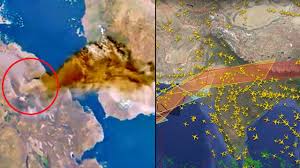
Separately, the rare eruption of Ethiopia’s Hayli Gubbi volcano on November 23 sent volcanic ash clouds drifting towards northern India, including Gujarat, Rajasthan, Delhi, and surrounding regions. The ash plume contains sulfur dioxide and glass particles but is residing in the upper atmosphere, so air quality impacts in India are expected to be minimal though air traffic has been disrupted and flight cancellations occurred as a precaution.
The ash cloud is expected to clear from Indian skies by the evening of November 25, as it drifts towards China and beyond.
Here is more detailed information on both key events:
Marburg Virus Outbreak in Ethiopia:
-
The outbreak is centered in the South Omo zone, with the first cases identified in Jinka town.
-
The virus causes severe hemorrhagic fever with symptoms similar to Ebola, including high fever, bleeding, and organ failure.
-
The fatality rate currently stands around 50%, with five deaths among ten confirmed cases.
-
Contact tracing and monitoring of people who had contact with infected patients is ongoing.
-
The government and WHO have improvised rapid diagnostic testing, isolation units, and treatment protocols to manage cases.
-
Ethiopia has intensified public health messaging about safe burial practices and infection prevention in healthcare settings.
-
Neighboring countries have been alerted to prepare for possible cross-border spread.
-
This is the country’s first recorded Marburg virus outbreak, raising concerns about preparedness.
Ethiopia Volcanic Eruption and Ash Clouds:
-
The Hayli Gubbi volcano erupted after a dormant period of about 12,000 years, producing significant ash plumes.
-
Ash clouds drifted towards northern India, crossing Gujarat, Rajasthan, Delhi, Haryana, and Punjab.
-
While sulfur dioxide and volcanic ash can impact respiratory health and visibility, officials say ash is mostly in the upper atmosphere, minimizing ground-level health risks.
-
Flight operations were temporarily suspended in affected Indian regions as a precaution against ash damage to engines.
-
Ash dispersal is expected to reduce by the evening of November 25, with winds pushing ash towards China and further east.
-
Monitoring agencies continue to track ash density and air quality in affected areas.
-
Environmental experts caution on possible minor effects on weather patterns but no major disruptions anticipated.
Both events are being closely monitored by health authorities and environmental agencies to manage risks and mitigate impact on local and international populations. Further updates are expected as investigations and response actions progress.