The marketing landscape has changed dramatically over the past decade. With customer behavior shifting toward digital platforms, brands must choose the right strategies to attract, engage, and convert their audience. Two commonly discussed approaches are inbound marketing and outbound marketing—each with its own strengths, channels, and outcomes.
In this comprehensive guide, we break down the key differences between inbound and outbound marketing, their benefits, examples, and how businesses can combine both for maximum impact.
What Is Inbound Marketing?
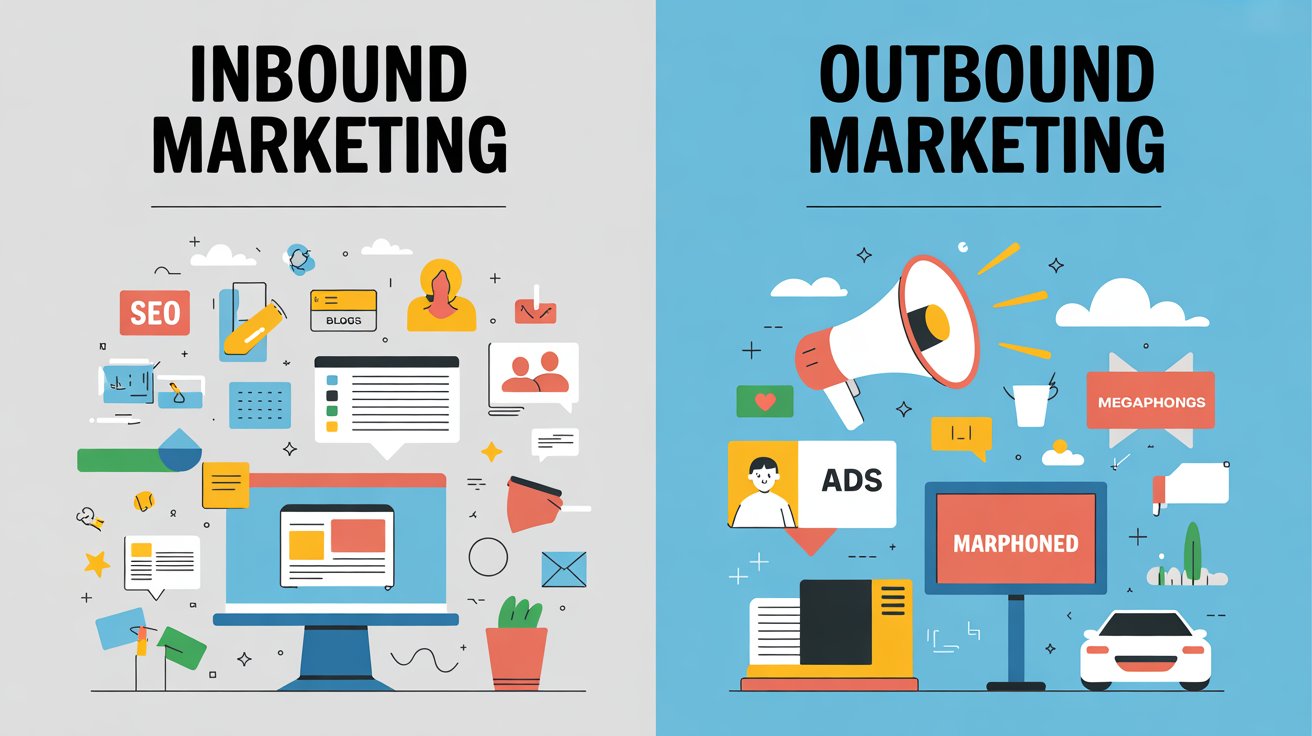
Inbound marketing is a strategy that focuses on attracting customers organically through valuable, relevant, and helpful content. Instead of pushing products on potential buyers, inbound marketing aims to pull them in by addressing their problems, needs, or interests.
Key components of inbound marketing:
-
Content marketing (blogs, articles, guides)
-
SEO (search engine optimization)
-
Social media engagement
-
Email nurturing
-
Videos and webinars
-
Lead magnets (ebooks, checklists, whitepapers)
How inbound marketing works:
-
Attract the right audience using search-optimized content.
-
Engage them with meaningful insights and solutions.
-
Convert them into leads with relevant offers.
-
Delight them with ongoing value to build long-term loyalty.
Why brands prefer inbound marketing
-
Cost-effective in the long run
-
Builds credibility and trust
-
Drives organic traffic
-
Generates high-quality leads
-
Improves customer relationships
What Is Outbound Marketing?
Outbound marketing refers to the traditional approach where businesses push their message to a wide audience, whether or not they are actively looking for the product or service. This method relies on mass communication and paid promotion.
Common outbound marketing channels:
-
TV and radio ads
-
Cold calling
-
Print advertisements
-
Billboards
-
Trade shows
-
Email blasts
-
Paid ads (Google Ads, social ads)
How outbound marketing works:
Outbound marketing focuses on getting your brand in front of as many people as possible. It’s typically interruption-based marketing, meaning the audience is exposed to your message even if they are not searching for it.
Why brands use outbound marketing
-
Faster reach and visibility
-
Great for brand recognition
-
Useful for product launches
-
Can target specific demographics with paid ads
-
Delivers immediate (short-term) results
Inbound vs Outbound Marketing: Key Differences
| Aspect | Inbound Marketing | Outbound Marketing |
|---|---|---|
| Approach | Pull strategy | Push strategy |
| Focus | Attracting interested customers | Reaching out to broad audiences |
| Cost | Lower long-term cost | Higher ongoing spending |
| Content Type | Blogs, SEO, social media | Ads, cold calls, mass emails |
| Customer Interaction | Two-way communication | One-way communication |
| Lead Quality | High-intent leads | Mixed lead quality |
| Timeline | Long-term, sustainable growth | Immediate but short-lived results |
Which Is Better: Inbound or Outbound Marketing?
There’s no universal winner—the best strategy depends on your goals.
Inbound works best when:
-
You want long-term brand authority
-
You’re building organic traffic
-
You’re generating quality leads
-
You’re targeting a niche audience
Outbound works best when:
-
You need immediate visibility
-
You’re launching a new product
-
You want broad brand awareness
-
You have a large marketing budget
The Most Effective Approach: A Hybrid Strategy
Modern businesses often achieve the best results by combining inbound and outbound marketing.
Example of a hybrid strategy:
-
Use SEO and blogs to attract long-term organic leads.
-
Run Google Ads or social ads to boost traffic quickly.
-
Publish social media content to engage followers.
-
Use email nurturing sequences to convert outbound leads.
This balanced approach ensures both sustained growth and immediate results.
Final Thoughts
Understanding the difference between inbound and outbound marketing helps brands choose the right strategy for their goals. While inbound marketing builds trust and long-term value, outbound marketing delivers quick exposure and brand recognition. When used together, they create a powerful marketing ecosystem that attracts, engages, and converts customers effectively.
Whether you’re a startup, small business, or enterprise, blending both methods can help you achieve a strong, scalable, and sustainable marketing presence.