July is one of the busiest months for taxpayers, businesses, employers, and tax professionals in India. Several important income tax compliance deadlines, including Tax Deducted at Source (TDS) payments, statement filings, and Income Tax Return (ITR) submissions, fall during this month. Missing these deadlines can result in penalties, interest charges, or unnecessary notices from the Income Tax Department.
Whether you’re a salaried employee, freelancer, business owner, or corporate taxpayer, staying informed about the July Income Tax Calendar 2026 can help you meet your tax obligations on time and avoid last-minute stress.
Here’s a detailed overview of the major income tax deadlines you should keep in mind during July 2026.
Why July Is Important for Taxpayers
July marks the beginning of several key compliance activities after the first quarter of the financial year. Employers, deductors, businesses, and individual taxpayers are required to complete various tax-related filings, including TDS payments, quarterly statements, and income tax return preparation.
Keeping track of these dates ensures timely compliance and helps taxpayers avoid late fees and interest under the Income-tax Act.
Important Income Tax Deadlines in July 2026
7 July 2026 – Deposit of TDS/TCS
Tax Deducted at Source (TDS) and Tax Collected at Source (TCS) deducted or collected during June 2026 should generally be deposited with the government by 7 July 2026.
This deadline applies to employers, businesses, companies, and other entities responsible for deducting or collecting tax.
15 July 2026 – Issue of TDS Certificates (Where Applicable)
Certain TDS certificates related to deductions made during previous months may be required to be issued by mid-July, depending on the applicable provisions and forms.
Timely issuance of TDS certificates helps taxpayers accurately claim tax credits while filing their Income Tax Returns.
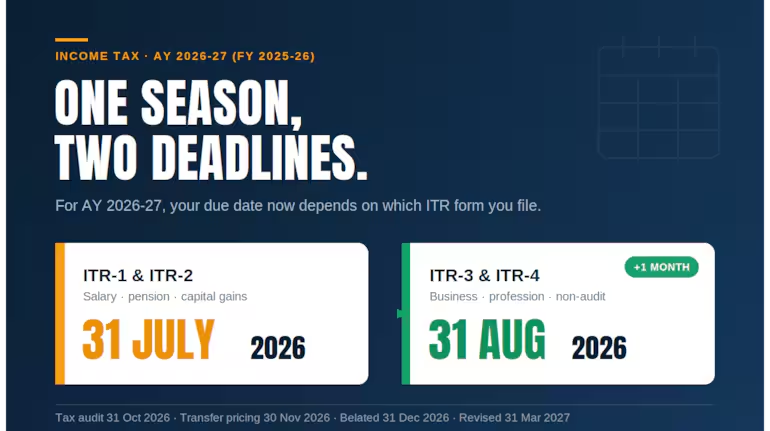
31 July 2026 – Income Tax Return (ITR) Filing Due Date (Subject to Government Notification)
For many individual taxpayers and Hindu Undivided Families (HUFs) not requiring a tax audit, 31 July is traditionally the due date for filing the Income Tax Return.
However, taxpayers should note that the government may extend this deadline through official notifications. It is always advisable to verify the latest due dates announced by the Income Tax Department before filing.
Filing your ITR before the due date offers several benefits, including:
- Faster processing of tax refunds
- Easy loan and visa documentation
- Avoidance of late filing fees
- Reduced risk of notices and penalties
- Better financial record management
TDS Quarterly Compliance
July also involves preparations for quarterly TDS compliance relating to the first quarter (April–June).
Deductors should ensure:
- TDS has been correctly deducted.
- PAN details are accurate.
- Challans are properly matched.
- Salary records are updated.
- Interest calculations, if applicable, are completed before filing quarterly statements.
Accurate reporting minimizes the chances of mismatches in taxpayers’ Form 26AS and Annual Information Statement (AIS).
Tips for Timely Tax Compliance
To avoid last-minute issues, taxpayers should follow a few simple practices:
- Keep salary slips, bank statements, investment proofs, and Form 16 ready.
- Verify TDS credits in Form 26AS and AIS before filing.
- Reconcile income from all sources, including interest, capital gains, and freelance income.
- Ensure Aadhaar and PAN are linked, if required under applicable rules.
- Double-check bank account details to receive refunds without delays.
- File returns well before the due date to avoid heavy traffic on the e-filing portal.
Consequences of Missing Tax Deadlines
Failure to comply with income tax deadlines may result in:
- Late filing fees under applicable provisions.
- Interest on unpaid taxes.
- Delayed tax refunds.
- Notices from the Income Tax Department.
- Additional compliance requirements.
Timely filing not only ensures legal compliance but also strengthens your financial credibility for loans, credit cards, and visa applications.
Final Thoughts
The July Income Tax Calendar 2026 serves as an important reminder for every taxpayer to stay organised and complete all required tax compliance on time. From depositing TDS and issuing certificates to filing Income Tax Returns, every deadline plays a crucial role in maintaining smooth financial and tax records.
Since tax rules and due dates may be revised through government notifications, taxpayers should regularly check updates from the Income Tax Department before taking any compliance-related action. Planning and filing early can help you avoid penalties, reduce stress, and ensure a hassle-free tax filing experience.