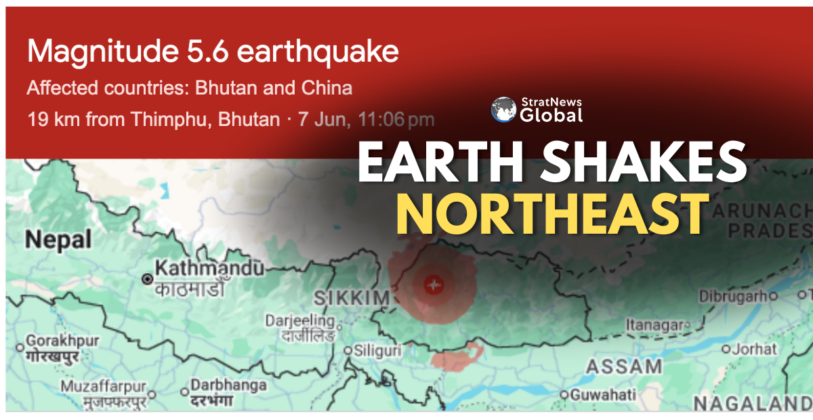
A 5.8-magnitude earthquake struck Bhutan late Sunday night, sending tremors across several parts of Northeast India and raising concerns among residents in the region. The earthquake was followed by multiple aftershocks, prompting authorities to closely monitor the situation. While the tremors were widely felt, no immediate reports of major damage or casualties were released at the time of reporting.
The seismic event serves as another reminder of the Himalayan region’s vulnerability to earthquakes due to its location in one of the world’s most active tectonic zones.
Earthquake Felt Across Multiple Regions
Residents in Bhutan reported strong shaking as the earthquake struck, causing people to move outdoors as a precaution. Tremors were also felt in several states of Northeast India, including Assam, Arunachal Pradesh, Meghalaya, and parts of West Bengal.
Many people shared their experiences on social media, describing sudden shaking of buildings, rattling windows, and brief disruptions. Although the tremors caused concern among residents, authorities have not reported any significant structural damage so far.
Emergency response teams and local administrations remained alert throughout the night, assessing the situation and gathering information from affected areas.
Multiple Aftershocks Recorded
Following the main earthquake, several aftershocks were recorded in and around Bhutan. Aftershocks are common after significant seismic events and occur as the Earth’s crust adjusts following the release of accumulated tectonic stress.
Experts note that aftershocks can continue for hours, days, or even weeks, depending on the magnitude and geological characteristics of the earthquake. While most aftershocks are weaker than the main quake, they can still be felt by nearby populations and may pose additional risks to already weakened structures.
Authorities have advised residents to remain cautious and follow official updates regarding seismic activity.
Why Earthquakes Are Common in Bhutan and Northeast India
Bhutan and Northeast India lie within the Himalayan seismic belt, one of the most earthquake-prone regions in the world. The area is situated along the boundary where the Indian tectonic plate continues to push against the Eurasian plate.
This ongoing collision has created the Himalayan mountain range and generates significant geological stress beneath the Earth’s surface. When this stress is released suddenly, earthquakes occur.
The region has experienced several notable earthquakes over the decades, making disaster preparedness and resilient infrastructure essential for reducing future risks.
Authorities Monitoring the Situation
Government agencies and disaster management authorities in Bhutan and India are monitoring the aftermath of the earthquake. Initial assessments indicate that the impact has been limited, but detailed inspections are ongoing to ensure public safety.
Local officials have encouraged residents to stay informed through verified government channels and avoid spreading unconfirmed information. Emergency services remain prepared to respond should any delayed reports of damage emerge.
Transportation networks, communication systems, and essential services were reported to be functioning normally following the earthquake.
Earthquake Safety Tips for Residents
In earthquake-prone regions, preparedness can significantly reduce risks during seismic events. Experts recommend the following safety measures:
- Drop, Cover, and Hold On during shaking.
- Stay away from windows, glass, and heavy objects.
- If outdoors, move to an open area away from buildings and power lines.
- Keep an emergency kit with essential supplies.
- Follow official advisories and emergency instructions.
- Be prepared for possible aftershocks after the main earthquake.
Awareness and preparedness remain critical for communities living in seismically active regions.
Conclusion
The 5.8-magnitude earthquake that struck Bhutan and was felt across Northeast India has once again highlighted the seismic sensitivity of the Himalayan region. Although no major damage has been reported, the occurrence of multiple aftershocks has kept authorities and residents vigilant.
As assessments continue, officials are urging people to remain alert, follow safety guidelines, and rely on verified information sources for updates. The event underscores the importance of earthquake preparedness in regions where tectonic activity remains a constant reality.