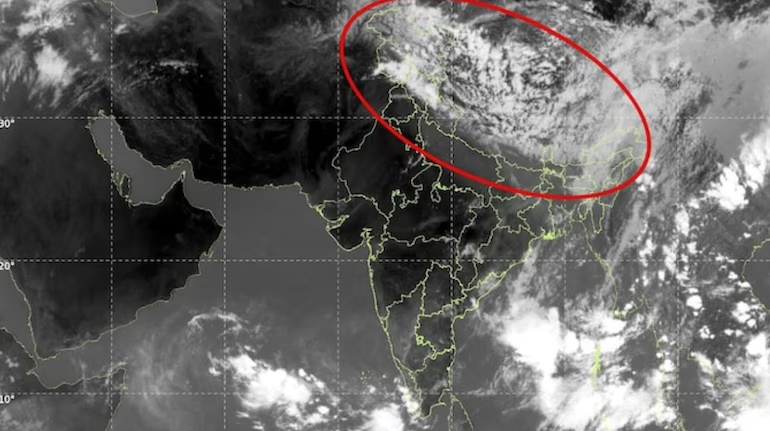
After days of scorching temperatures and severe heatwave conditions across northern India, weather experts are now predicting major relief as a massive cloud band has formed over the region. Satellite images captured by India’s INSAT-3DS weather satellite revealed a gigantic cloud system stretching nearly 2,500 kilometres across several northern states, signalling an important weather shift.
The development comes at a time when many cities in North India, including Delhi, Rajasthan, Haryana, Punjab, and Uttar Pradesh, have been experiencing dangerously high temperatures. Rajasthan’s Sri Ganganagar recently recorded temperatures above 48 degrees Celsius, making it one of the hottest places in the world this season.
What Is Causing the Massive Cloud Formation?
Meteorologists say the cloud band is linked to an active western disturbance interacting with moisture from the Arabian Sea and the Bay of Bengal. This combination has created atmospheric instability, leading to the development of large thunderstorm systems across North India.
Western disturbances are weather systems that originate in the Mediterranean region and travel eastward toward the Indian subcontinent. These systems are known for bringing rainfall, thunderstorms, snowfall, and cooler weather conditions to the northern parts of India, especially during winter and pre-monsoon months.
According to weather experts, the current disturbance is particularly strong because of the intense heat already prevailing across the region. When extremely hot land surfaces interact with incoming moisture-laden winds, powerful convection systems form rapidly, creating massive cloud clusters visible from space.
Rain, Thunderstorms and Dust Storms Expected
The India Meteorological Department (IMD) has forecast thunderstorms, rainfall, lightning activity, hailstorms, and strong gusty winds across several northern states over the next few days. Delhi-NCR, Punjab, Haryana, Rajasthan, Uttar Pradesh, and nearby regions are likely to witness changing weather conditions as the western disturbance becomes more active.
Delhi and the surrounding NCR areas have already started experiencing weather changes. Several locations reported heavy rainfall, dust storms, and gusty winds, bringing temporary relief from the intense summer heat. The IMD has also issued alerts for thunderstorms and strong winds in multiple districts.
Meteorologists predict that temperatures across North India could drop by 5 to 10 degrees Celsius over the coming days due to increased cloud cover and rainfall activity.
Heatwave Conditions Had Intensified Earlier
Before the arrival of the cloud system, several northern and central Indian states were struggling under severe heatwave conditions. The IMD had earlier issued heatwave alerts for Punjab, Haryana, Chandigarh, Rajasthan, and parts of central India, warning residents to avoid outdoor activities during peak afternoon hours.
Scientists have also warned that 2026 could become another year of extreme summer conditions in India due to rising global temperatures and changing climate patterns. Experts believe that prolonged heatwaves may become more frequent and intense in the future.
Why This Weather Shift Matters
The expected rainfall is likely to provide temporary relief to millions of people affected by the ongoing heatwave. Cooler temperatures could also reduce electricity demand caused by continuous air-conditioner and cooler usage in urban areas.
However, weather officials have also warned that intense thunderstorms and strong winds may lead to disruptions, including traffic issues, reduced visibility, uprooted trees, and localised damage in some regions. Residents are advised to follow IMD weather advisories and remain cautious during thunderstorm activity.
The development of this massive cloud band highlights the growing intensity of pre-monsoon weather systems across India. As the southwest monsoon gradually approaches the Indian mainland, meteorologists expect more unstable weather patterns, including sudden rain spells and thunderstorms, in the coming weeks.