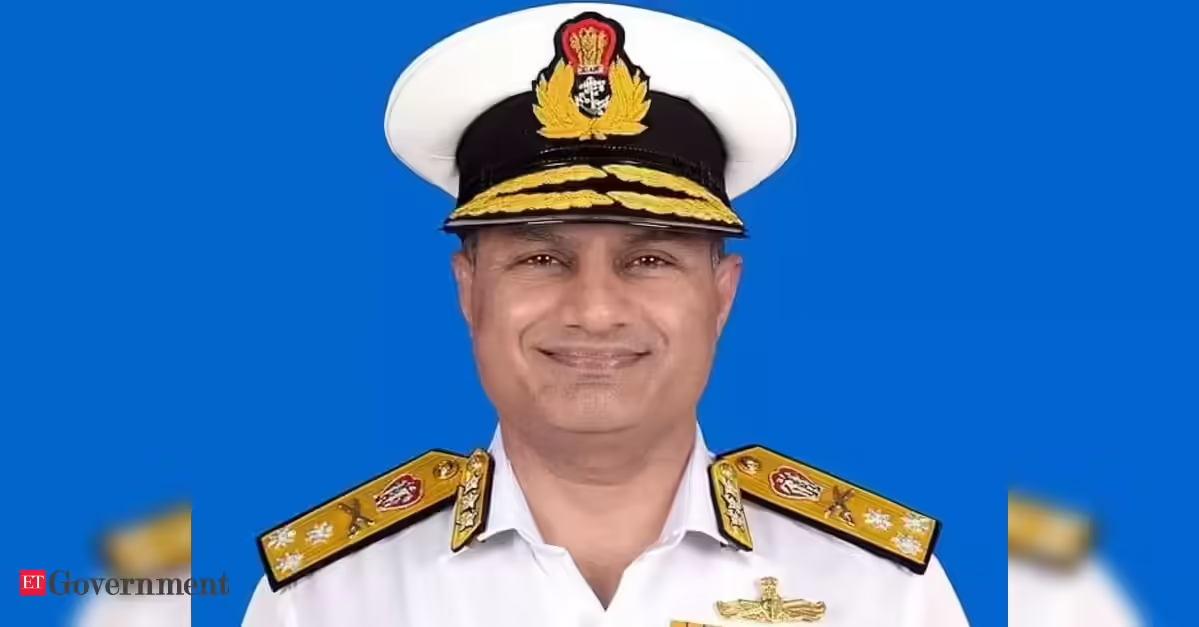
The Government of India has appointed Vice Admiral Krishna Swaminathan as the next Chief of the Naval Staff (CNS), marking a significant leadership transition for the Indian Navy. The appointment highlights the government’s continued focus on strengthening India’s maritime capabilities and modernizing naval operations amid evolving regional and global security challenges.
Vice Admiral Krishna Swaminathan brings decades of distinguished military service, operational expertise, and strategic leadership experience to the country’s top naval position. His appointment is expected to further enhance the Indian Navy’s operational preparedness, maritime security initiatives, and international naval cooperation efforts.
Leadership Transition in the Indian Navy
The role of the Chief of the Naval Staff is one of the highest-ranking positions in India’s defence structure. The CNS is responsible for commanding the Indian Navy, overseeing naval strategy, modernization programs, operational readiness, and maritime security operations.
With the appointment of Vice Admiral Krishna Swaminathan, the Indian Navy is set to continue its strategic expansion and modernization initiatives. The leadership change comes at a crucial time when maritime security has become increasingly important in the Indo-Pacific region.
India has been actively strengthening its naval infrastructure, increasing surveillance capabilities, and expanding strategic partnerships with allied nations. The appointment of an experienced naval officer is therefore considered vital for maintaining operational efficiency and safeguarding India’s maritime interests.
Career and Experience of Vice Admiral Krishna Swaminathan
Vice Admiral Krishna Swaminathan has served the Indian Navy in multiple leadership and operational roles throughout his distinguished career. Known for his strategic insight and professional excellence, he has contributed significantly to naval planning, operational management, and defence preparedness.
Over the years, he has held several important appointments involving:
- Naval operations and fleet command
- Strategic maritime planning
- Training and personnel management
- Defence coordination and policy implementation
- Operational readiness and modernization initiatives
His extensive experience across operational and administrative roles makes him well-equipped to lead the Indian Navy through emerging security and technological challenges.
Importance of the Appointment
The appointment of a new naval chief is always considered a major development in India’s defence and strategic affairs landscape. The Chief of the Naval Staff plays a central role in shaping the future direction of the Indian Navy and ensuring national maritime security.
Under the leadership of Vice Admiral Krishna Swaminathan, the Navy is expected to continue focusing on:
- Maritime defence modernization
- Indigenous naval technology development
- Expansion of naval capabilities
- Strengthening Indo-Pacific partnerships
- Coastal and maritime surveillance systems
- Naval combat readiness
The Indian Ocean Region remains strategically important for India due to trade routes, geopolitical interests, and regional security concerns. The new CNS will therefore play a key role in ensuring India’s maritime dominance and security preparedness.
Focus on Naval Modernization
The Indian Navy has been actively pursuing modernization projects aimed at improving operational efficiency and combat capabilities. These efforts include:
- Development of indigenous warships and submarines
- Advanced surveillance and missile systems
- Aircraft carrier operations
- Integration of modern defence technologies
- Expansion of cyber and electronic warfare capabilities
Vice Admiral Krishna Swaminathan’s leadership is expected to support the continuation of these initiatives while strengthening India’s long-term naval strategy.
India’s Strategic Maritime Vision
India’s growing role in the Indo-Pacific region has significantly increased the importance of naval diplomacy and maritime partnerships. The Indian Navy regularly participates in international naval exercises and collaborates with several countries to ensure regional security and freedom of navigation.
As the next Chief of the Naval Staff, Vice Admiral Krishna Swaminathan is likely to focus on:
- Enhancing maritime partnerships
- Expanding defence cooperation
- Strengthening regional security initiatives
- Improving joint military operations
- Advancing naval technology integration
His appointment aligns with India’s broader strategic vision of becoming a stronger maritime power capable of addressing evolving global security challenges.
Role of the Indian Navy in National Security
The Indian Navy plays a critical role in protecting India’s maritime borders, securing sea trade routes, conducting humanitarian missions, and responding to regional emergencies.
The Navy also contributes to:
- Anti-piracy operations
- Disaster relief missions
- Maritime surveillance
- Strategic deterrence
- International peace and security operations
Strong naval leadership is therefore essential for maintaining national security and operational readiness.
Conclusion
The appointment of Vice Admiral Krishna Swaminathan as the next Chief of the Naval Staff marks an important milestone for the Indian Navy and India’s defence establishment.
With extensive operational experience and leadership expertise, he is expected to guide the Navy through a period of modernization, strategic expansion, and evolving maritime challenges. His leadership will play a significant role in strengthening India’s naval capabilities and ensuring the country’s maritime security interests remain protected.
As India continues to enhance its presence in the Indo-Pacific region, the role of the Indian Navy and its leadership will remain central to the nation’s defence and strategic priorities.